



Recently I was reminded of Don José María Chacón, the last Spanish Governor of Trinidad and Tobago. The trigger for this memory was the severe flooding that has been causing misery in Trinidad. It took me back to Chacón and his manhandling of one watercourse when he began in 1787, the gargantuan feat of changing the course of the St. Ann's River in Port of Spain. The accounts also tell us that Chacón took money out of his own private purse to complete that project! That really impressed me when I first learned of it since we've come to expect that with some public officials the cash flow will go in the opposite direction.

Don José María Chacón
From the little that I was taught in school about the last Spanish Governor of Trinidad and Tobago, I've had no reason to dislike Chacón. I think the man genuinely loved Trinidad and did his best to impose his idea of order on the place. Under the best of circumstances, that could have been problematic especially if as a non-native he had been driven by an unbridled missionary impulse. But there's enough in the history books to suggest that Chacón did go native and that his intentions were sincerely for the betterment of the lives of the inhabitants of the island.
If you've never read The History of Trinidad under the Spanish Government by Pierre Gustave Louis Borde, I promise you that you will not regret getting your hands on this two-volume work. It was republished by Paria Publishing in 1982 and I continue to count it among my favourite history texts. Borde supplies lots of details about Chacón that present the man and the administrator and the spirit which infused his tenure as Governor of Trinidad. I mentioned earlier that he had taken money out of his own pocket to help finance the redirecting of the St. Ann's river. From Borde's account, it seems that his civic mindedness was contagious:
"p.238 - Finally it was the business community of the town which was disinterested enough to impose a tax of 2 1/2 percent on all importations to provide funds for the construction of a prison, a theatre and other public buildings. Each one considered it an honour to do something for the good of the country, and these noble sentiments produced a perfect accord between the administration and those who were administered. The colony was so attached to their Governor that, fearing they might one day see him replaced by someone else, a universal petition was sent to the metropolitan government in Spain at the beginning of 1788 (13th April). It was signed by all members of the Cabildo, the commandants of the quarters, the Alcaldes, and many others, requesting, in the name of the entire community of Trinidad, that the term of office of Don José María Chacón should be prolonged by five years."As Chacón kept coming to mind, I began to wonder about the meaning of the word Chacón and after searching Google, I discovered to my amusement that it means "gecko"- what some of us might have referred to as a teck-a-teck.
p. 235 - In Port of Spain, the merchants were numerous. The place was bursting with French haberdashery, which the launches from the Spanish Main came in great numbers to buy. The exports from the colony consisted of sugar, coffee, cotton, cocoa and indigo. All the industries and professions and trades prospered, and the well-being of the colony was general. One can say without exaggeration, that the period of the first eight years of the government of Don José María Chacón was the Golden Age of Trinidad."
Source: The History of Trinidad under the Spanish Government by Pierre Gustave Louis Borde, Part Two
"The Chacón surname comes from the word Chacón, meaning "gecko", as such it was most likely originally a nickname which went on to become a hereditary surname."Reading this, I had to smile. The eminent Don José María Chacón, The Chevalier de Calatrava, Sanchez de Sotomayor, Rodriguez de Rivera, Infante de Lara y Castro, under the weight of the high expectations of the Spanish empire for their colony of Trinidad, had been teetering all this time on the back of a tiny reptile! This illustrious man, who also carried the official titles of Captain General and Governor of the Island, Sub-Inspector of the Troops in his garrison, Judge Conservator and Royal Vice Patron of Mails and Postages, could also have been known as "The Lizard".
I began to really think about "lizards" after that revelation. Everyone has a lizard. Some people hide theirs and others wear them proudly on their sleeves. The personalities of some lizards are so distinctive that people acknowledge them and they become the inspirations for the nicknames which are given to their owners. There is a lizard under every grand idea, every grand scheme and it can be the strongest or the weakest link in its fulfillment. Present at every event is a lizard, and it's appearance can either empty a room or prove to be the life of the party.
On matters of sovereignty though, Chacón's lizard had the final roar. In 1797 he advised his namesake to surrender the island of Trinidad to a British fleet under the command of Sir Ralph Abercromby, all this without a squeak. We must also remember that this was also accomplished without any human blood being spilled. Empires hate the sovereignty of other states but Chacón was not about to take a stand to defend Spanish sovereignty on the backs of the inhabitants of the colony.
"p. 283 - Thus, by eight o'clock in the evening, all the Spanish forces found themselves completely encircled, General Abercromby having taken up these positions was now certain that his opponents could not escape him, and he therefore sent an officer to the Governor under a flag of truce, to deliver the following message:It is my belief that Chacón's lizard loved humanity [or feared the French] even more than Spanish sovereignty or the British empire. He turned his back on Spain and signed us over to the British. Some of us would not have been here today if he had made another choice, just like things would have gone very differently if the armed forces between 10:30 and 11:00 on the night of Friday 27 July, 1990, had actually obeyed A.N.R. Robinson's spirited command: "Attack with full force!"
p. 284 - Tell the Governor [Chacón] that I regret to see that he has no hope whatever of obtaining what he desires. The superiority of the forces under my command has made me master of this town, and has enabled me to encircle both the land and sea forces in such a manner that, by taking possession of the heights they have been cut off from all communication and all help; that with such unequal forces as he has at his disposal there is no possibility of making any resistance. Rather than spilling blood uselessly, I request that he should appoint a place where we can confer together and where I can offer him the most honourable capitulation which it is possible to give to good and faithful soldiers who otherwise would be uselessly sacrificed. ...
After two long days of anxiety, Governor Chacon finally succeeded in getting what he wanted all the time, that is , the capitulation of the island without any fighting. He called together a council of war consisting of the Lieutenant Governor and the Officers commanding the various corps, so that they could discuss the proposal of the English general. All of them, taking into consideration the desperate position of their affairs, necessarily decided to agree to capitulation. After that, an interview took place between the two heads, at which it was agreed to
p. 285 - suspend all armed action immediately and a conference was arranged for eight o'clock the next morning the 18th, to discuss the terms of capitulation. At the appointed hour the next day, General Abercromby, Admiral Harvey and Governor Chacon met in one of the houses in the town, and the following fifteen articles of Capitulation were recorded and signed by them..."
Source: The History of Trinidad under the Spanish Government by Pierre Gustave Louis Borde, Part Two
Perhaps our armed forces' reluctant lizard was a direct descendant of Chacón's?
With such weighty subjects, it is my curse [or my lizard] to be constantly distracted.
...............................................................................................................................
"Patria est communis omnium parens" - Our native land is the common parent of us all. Keep it beautiful, make it even more so.
Blessed is all of creation
Blessed be my beautiful people
Blessed be the day of our awakening
Blessed is my country
Blessed are her patient hills.
Mweh ka allay!
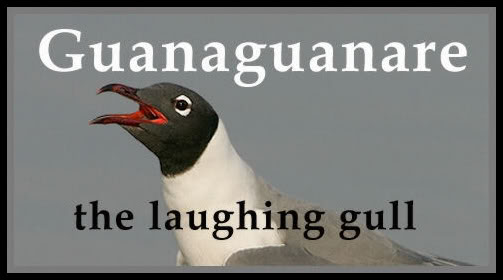
Guanaguanare


