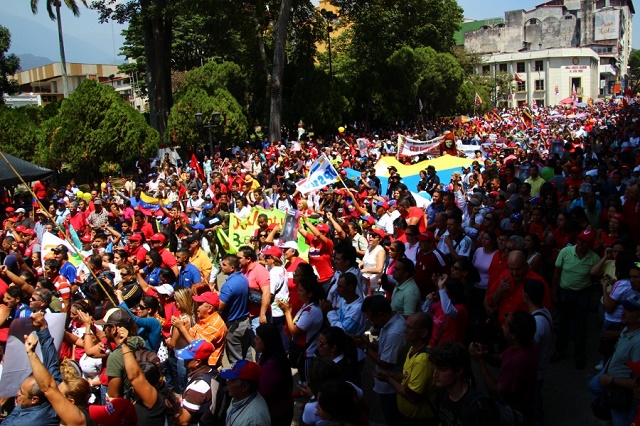
Showing posts with label self-determination. Show all posts

Sons of the King [Song]


Uploaded by Blue Cinamon

SONS OF THE KING
By Lou Lyons and Muhammad Muwakil

To the rulers of our fathers,
Think you're goin' rule my life forever?

Do you know what it means to be fighting an ungodly war
And still be at peace?
Do you know how it feels to be living in the biggest cage
And still feel so free
Do you know what it means to be running for all of your life
And still be at ease?
Do you know how it feels to be sitting for all of your days
And then find your feet?

So I'm sending a message loud and clear to the village thieves [fiends?]
They've been winning way too long, killing our dreams
Who you think you fighting?
You should be afraid of these words,
They are bound to come true.

So if they won't open the door, we won't come knocking, not any more,
We're sons of the king.
They won't open the door, we won't come knocking, not any more,
We're sons of the king.
They won't open the door, we won't come knocking, not any more,
We're sons of the king.
They won't open the door, we won't come knocking, not any more,
We're sons of the king.

Source: The lyrics posted on this blog are often transcribed directly from performances. Although it is my intention to faithfully transcribe I do not get all the words and I have a knack for hearing the wrong thing. Please feel free to correct me or to fill in the words that I miss by dropping me a message via e-mail. I'd be forever grateful. Thanks in advance! ..............................................................................................................................
 

A Note From The Gull

Thank you, Lou Lyons and Muhammad Muwakil.

"Patria est communis omnium parens" - Our native land is the common parent of us all. Keep it beautiful, make it even more so.

Blessed is all of creation
Blessed be my beautiful people
Blessed be the day of our awakening
Blessed is my country
Blessed are her patient hills.

Mweh ka allay!
Guanaguanare

Easter Monday: La Lucha continúa.

Brother Obama
We don’t need the empire to give us anything. Our efforts will be legal and peaceful, because our commitment is to peace and fraternity among all human beings who live on this planet.
Author: Fidel Castro Ruz | internet@granma.cu
march 28, 2016 12:03:14

"The kings of Spain brought us the conquistadores and masters, whose footprints remained in the circular land grants assigned to those searching for gold in the sands of rivers, an abusive and shameful form of exploitation, traces of which can be noted from the air in many places around the country.

"Tourism today, in large part, consists of viewing the delights of our landscapes and tasting exquisite delicacies from our seas, and is always shared with the private capital of large foreign corporations, whose earnings, if they don’t reach billions of dollars, are not worthy of any attention whatsoever.

"Since I find myself obliged to mention the issue, I must add - principally for the youth - that few people are aware of the importance of such a condition, in this singular moment of human history. I would not say that time has been lost, but I do not hesitate to affirm that we are not adequately informed, not you, nor us, of the knowledge and conscience that we must have to confront the realities which challenge us. The first to be taken into consideration is that our lives are but a fraction of a historical second, which must also be devoted in part to the vital necessities of every human being. One of the characteristics of this condition is the tendency to overvalue its role, in contrast, on the other hand, with the extraordinary number of persons who embody the loftiest dreams.

"Nevertheless, no one is good or bad entirely on their own. None of us is designed for the role we must assume in a revolutionary society, although Cubans had the privilege of José Martí’s example. I even ask myself if he needed to die or not in Dos Ríos, when he said, “For me, it’s time,” and charged the Spanish forces entrenched in a solid line of firepower. He did not want to return to the United States, and there was no one who could make him. Someone ripped some pages from his diary. Who bears this treacherous responsibility, undoubtedly the work of an unscrupulous conspirator? Differences between the leaders were well known, but never indiscipline. “Whoever attempts to appropriate Cuba will reap only the dust of its soil drenched in blood, if he does not perish in the struggle,” stated the glorious Black leader Antonio Maceo. Máximo Gómez is likewise recognized as the most disciplined and discreet military chief in our history.

"Looking at it from another angle, how can we not admire the indignation of Bonifacio Byrne when, from a distant boat returning him to Cuba, he saw another flag alongside that of the single star and declared, “My flag is that which has never been mercenary...” immediately adding one of the most beautiful phrases I have ever heard, “If it is torn to shreds, it will be my flag one day… our dead raising their arms will still be able to defend it!” Nor will I forget the blistering words of Camilo Cienfuegos that night, when, just some tens of meters away, bazookas and machine guns of U.S. origin in the hands of counterrevolutionaries were pointed toward that terrace on which we stood.

"Obama was born in August of 1961, as he himself explained. More than half a century has transpired since that time.

"Let us see, however, how our illustrious guest thinks today:

I have come here to bury the last remnant of the Cold War in the Americas. I have come here to extend the hand of friendship to the Cuban people,” followed by a deluge of concepts entirely novel for the majority of us:

We both live in a new world, colonized by Europeans,” the U.S. President continued, “Cuba, like the United States, was built in part by slaves brought here from Africa. Like the United States, the Cuban people can trace their heritage to both slaves and slave-owners.”

"The native populations don’t exist at all in Obama’s mind. Nor does he say that the Revolution swept away racial discrimination, or that pensions and salaries for all Cubans were decreed by it before Mr. Barack Obama was 10 years old. The hateful, racist bourgeois custom of hiring strongmen to expel Black citizens from recreational centers was swept away by the Cuban Revolution - that which would go down in history for the battle against apartheid that liberated Angola, putting an end to the presence of nuclear weapons on a continent of more than a billion inhabitants. This was not the objective of our solidarity, but rather to help the peoples of Angola, Mozambique, Guinea Bissau and others under the fascist colonial domination of Portugal.

"In 1961, just one year and three months after the triumph of the Revolution, a mercenary force with armored artillery and infantry, backed by aircraft, trained and accompanied by U.S. warships and aircraft carriers, attacked our country by surprise. Nothing can justify that perfidious attack which cost our country hundreds of losses, including deaths and injuries

"As for the pro-yankee assault brigade, no evidence exists anywhere that it was possible to evacuate a single mercenary. Yankee combat planes were presented before the United Nations as the equipment of a Cuban uprising.

"The military experience and power of this country is very well known. In Africa, they likewise believed that revolutionary Cuba would be easily taken out of the fight. The invasion via southern Angola by racist South African motorized brigades got close to Luanda, the capital in the eastern part of the country. There a struggle began which went on for no less than 15 years. I wouldn’t even talk about this, if I didn’t have the elemental duty to respond to Obama’s speech in Havana’s Alicia Alonso Grand Theater.

"Nor will I attempt to give details, only emphasize that an honorable chapter in the struggle for human liberation was written there. In a certain way, I hoped Obama’s behavior would be correct. His humble origin and natural intelligence were evident. Mandela was imprisoned for life and had become a giant in the struggle for human dignity. One day, a copy of a book narrating part of Mandela’s life reached my hands, and - surprise! - the prologue was by Barack Obama. I rapidly skimmed the pages. The miniscule size of Mandela’s handwriting noting facts was incredible. Knowing men such as him was worthwhile.

"Regarding the episode in South Africa I must point out another experience. I was really interested in learning more about how the South Africans had acquired nuclear weapons. I only had very precise information that there were no more than 10 or 12 bombs. A reliable source was the professor and researcher Piero Gleijeses, who had written the text Conflicting Missions: Havana, Washington, and Africa, 1959-1976, an excellent piece. I knew he was the most reliable source on what had happened and I told him so; he responded that he had not spoken more about the matter as in the text he had responded to questions from compañero Jorge Risquet, who had been Cuban ambassador and collaborator in Angola, a very good friend of his. I located Risquet; already undertaking other important tasks he was finishing a course which would last several weeks longer. That task coincided with a fairly recent visit by Piero to our country; I had warned him that Risquet was getting on and his health was not great. A few days later what I had feared occurred. Risquet deteriorated and died. When Piero arrived there was nothing to do except make promises, but I had already received information related to the weapons and the assistance that racist South Africa had received from Reagan and Israel.

"I do not know what Obama would have to say about this story now. I am unaware as to what he did or did not know, although it is very unlikely that he knew absolutely nothing. My modest suggestion is that he gives it thought and does not attempt now to elaborate theories on Cuban policy.

"There is an important issue:

"Obama made a speech in which he uses the most sweetened words to express: “It is time, now, to forget the past, leave the past behind, let us look to the future together, a future of hope. And it won’t be easy, there will be challenges and we must give it time; but my stay here gives me more hope in what we can do together as friends, as family, as neighbors, together.”

"I suppose all of us were at risk of a heart attack upon hearing these words from the President of the United States. After a ruthless blockade that has lasted almost 60 years, and what about those who have died in the mercenary attacks on Cuban ships and ports, an airliner full of passengers blown up in midair, mercenary invasions, multiple acts of violence and coercion?

Nobody should be under the illusion that the people of this dignified and selfless country will renounce the glory, the rights, or the spiritual wealth they have gained with the development of education, science and culture.

"I also warn that we are capable of producing the food and material riches we need with the efforts and intelligence of our people. We do not need the empire to give us anything. Our efforts will be legal and peaceful, as this is our commitment to peace and fraternity among all human beings who live on this planet."

Fidel Castro Ruz
March 27, 2016
10:25 p.m.
.....................................................................
.................................................................................................
.................................................................................................
.....................................................................................


.....................................................................
....................
................................................................................................
.................................................................................................
.......................................................................
..............................................................................................................................


A Note From The Gull

Thank you, Comandante! C'est tout dire!

"Patria est communis omnium parens" - Our native land is the common parent of us all. Keep it beautiful, make it even more so.

Blessed is all of creation
Blessed be my beautiful people
Blessed be the day of our awakening
Blessed is my country
Blessed are her patient hills.

Mweh ka allay!
Guanaguanare
Death Threats issued to Toronto priest for commemorating Hugo Chavez.

by Steve da Silva | BasicNews.ca | March 19, 2014.

"One of Toronto’s inner suburbs has become a focal point in the ongoing struggle in Venezuela between the Bolivarian transition to socialism and the fascist resistance that has been developing over the last month.

With its face to the bustling city moving past it on Dufferin, just a little south of Lawrence, the quaint little church of San Lorenzo appears as a modest sight to unwitting passersby. But the small church, and its Latin American Community Centre to the rear, are more than simple sites of worship.

Since its establishment in 1997, the San Lorenzo parish has become a beacon for many in the Latin American community who have fled fascist dictatorships and military juntas over the decades from places like Chile, El Salvador, and Guatemala. But its message and ministry amount to more than a salve for the restless migrant soul, more than a home away from home. In the words of the Church’s patron saint, San Lorenzo: “The poor are the treasures of the church.”

That this church actually treasures the poor (as opposed to seeing the poor as a source of its treasures) can be seen in the day-to-day activities that drive the vibrant community organization that has built up around San Lorenzo. Its community centre is home to Radio Voces Latinas 1660 AM, Canada’s only 24-hour Latin American radio station and a key alternative to commercial news, views, and music that dominate the spectrum.

San Lorenzo is also the organizer of the annual “Inti Raymi – Festival of the Sun,” which draws thousands into Christie Pits under the summer sun to to mark the celebration of the summer solstice in the tradition of the Andean region’s Indigenous peoples. The festival routinely raises thousands of dollars for the church’s solidarity missions and charity drives.

Among those programs include fundraising drives for disaster relief in Haiti, Peru, Bolivia, Chile, and Venezuela; as well as the community centre’s “Caravan of Hope,” which drives decommissioned ambulances and wheel-trans buses to El Salvador annually.

However, over the years, San Lorenzo and its priest Hernan Astudillo, have courted more controversy than one may think such acts of humanitarianism would invite. When charity becomes solidarity — when one proceeds from charitable handouts to morally and materially supporting struggles to emancipate people from their class oppression — some hearts simply stop bleeding for the poor.

As the old proverb has it, “Give a man a fish and you feed him for a day; teach a man to fish and you feed him for a lifetime.” But what if this man is violently dispossessed of his fishing rod? His family chased away from his lake-side community and into the urban slums? What if the rivers are being poisoned by large corporations?

It is the understanding that such social inequalities are the basis for poverty and suffering that drives San Lorenzo’s and Hernan Astudillo’s theology, which is part of the liberation theology tradition in Latin America that has prioritized the poor and their emancipation and which is seen as reflecting historical Jesus’s lived practice.

"We don't practice the theology of the conquerors. 
We follow the theology of the historical Jesus Christ, 
a man who gave his life for equal rights, 
a man who fighting the Roman Empire."  - Father Hernan

This past March 9th, San Lorenzo held a mass to mark the one-year anniversary of the death of former Venezuelan President Hugo Chávez — a tradition in keeping with past ceremonies held by the church for Latin America’s champions of the poor, with masses marking the deaths of various fighters for freedom, from the assassinated Che Guevera to the murdered Archbishop Oscar Romero.

Romero was the Catholic bishop in El Salvador who was assassinated in 1980 in wave of terror that targeted thousands of leftists, including many clerical elements. Romero is also a key figure in Latin America’s liberation theology tradition.

I did the mass in honour of Hugo Chavez, who I consider with all humility, a very holy man,” priest Hernan Astudillo told BASICS. The result was predictable and sadly not unfamiliar to Astudillo and the church.

I received a fax saying they would ‘eliminate’ me personally… basically, a death threat, they will kill me. We have received death threats over the phone. We have received two messages: One sent by email from an anti-communist organization insulting our people who work on the radio station, saying that they are going to take out our [radio] antenna.”

On March 6, the church received a letter from an organization calling itself “Contracomunistas” in which the Radio Voces Latinas was cited as a target. On March 12, the fax threatening Father Hernan’s life came in.

But the threats are nothing new for Father Hernan: “This reminds me how when 14 years ago I performed a mass for Monsignor Oscar Romero in this same church, I had also received death threat letters because I was holding a mass for a ‘communist bishop’.”

If only this was all just some verbal aggressiveness from the Latin American community’s right wing, the threats could perhaps be dismissed as posturing from disgruntled elements anxious about their oligarchic families and classes losing their grips on power back home. But a history of these threats actually materializing on the Church gives great cause for concern.

In 2006, the antenna of Radio Voces Latinas was discovered to have been shot after having experienced some unknown technical problems for a period of time.

BASICS asked Father Hernan if the threats have ever translated into bodily harm: “I’ve received death threats more than ten times and on two occasions, a group has stolen money from us during our summer festival at Christie Pits park. In September 2008, they even came to my office, hit me, and dislocated my right shoulder. They were trying to instigate me to react violently, but I refused to.

Father Hernan drew out the irony and hypocrisy of the attacks on his church’s concern with the poor and their social struggles: “I’ve been meditating over how during this time of Lent [the season of penance and prayer leading into Easter], I might receive even more letters like this [death threats] as I prepare mass for Jesus Christ, because he was really far stronger than Monsignor Oscar Romero and many other martyrs and prophets in the world. His actions, his life, his decisions were always with the poor people.

BASICS asked Father Hernan if he’s seen any of this opposition or resistance to the church’s pro-poor messaging and its socialist sympathies from within his own parish: “This is from outside. This parish knows what kind of theology we have. We don’t practice the theology of the conquerors. We follow the theology of the historical Jesus Christ, a man who gave his life for equal rights, a man who was fighting the Roman Empire.

Jesus Christ was not a person who was faking his spirituality in his life. He was a wonderful human being with a pure and transparent identity, to rehumanize the world he was living in at the time in Nazareth and Galilee.”

BASICS correspondent and San Lorenzo parishioner Pablo Vivanco was also in attendance at the March 9 mass for Chávez, which brought out a single anti-Chávez protestor.

One individual brought out a placard in the mass that stated something to the effect of honoring the ‘student martyrs’ in Venezuela,” Vivanco commented.

Of course, the names he had on there (some of them incorrectly spelled) were of Chavistas and others killed by the violent opposition in Venezuela. One of the names this individual was hailing as a ‘martyr’ was Juan Montoya [killed in mid February], who was actually a prominent member the Tupamaros.”

The Tupamaros is a decades-old leftist guerrilla organization with a strong base in some of Caracas’ poor neighbourhoods that has been supportive but independent of the Venezuelan government.

So it’s entirely disingenuous to claim Montoya’s death for the opposition cause, and equally dishonest to not acknowledge that the vast majority of people who have been killed in the last month are the result of the opposition and their actions,” a fact of the reality in Venezuela that is being assiduously documented by independent researchers.

But the right wing sectors in the community unfortunately do not have this sort of tolerance,” Vivanco elaborated. “This isn’t the first time that threats have been issued against Father Hernan for his principled stances. What’s more concerning is that the violent right wing opposition in Venezuela is killing people and has also attacked media and journalists, so who knows if those allied with the opposition in Venezuela will try something like that here.”

In 2010, Father Hernan Astudillo visited Venezuela to learn about the vast expansion of popular media projects in the country and to deliver the community-generated funds to victims of landslides.

From his own experiences in the country, Father Hernan shared with BASICS his view that: “The opposition in Venezuela is fighting not because they want to help the poor people, but because they want Venezuela’s oil wealth to themselves. They are not fighting because they want to help the poor people, like President Hugo Chavez did. That finally poor people have hope is beautiful.“

The evidence of the threats against San Lorenzo and Hernan Astudillo are now in the hands of Toronto Police Services. BASICS contacted 13 Division’s Criminal Investigations Bureau on the morning of March 19, but the assigned detectives were not available at the time of publication for comment.

With the legitimacy that the Canadian government has given to the violent opposition and the blame for violence that is has misattributed to the Venezuelan government, we shall see if the threats against San Lorenzo will be treated with the same severity that such threats would be met with if they threatened a corporate leader or a Canadian politician. Updates on this investigation will be made here." SOURCE

Now let us see if those who claim to love Venezuela and her people so much, will gladly accept the following offers from Venezuelan President Nicolas Maduro and the Vatican.

"In a meeting at the Presidency with Governors and mayors, Venezuelan President Nicolas Maduro reiterated Monday night an invitation to dialogue with various political and social sectors on Wednesday.

"I am confident that [the dialogue] will lead to important agreements regarding the future of the nation. But foremost we must respect ourselves and respect the Constitution", Maduro said in Spanish at the end of the meeting. Opposition leader Henrique Capriles refused to attend in a show of opposition to what he described as the "violation of human rights and repression" against protesters." SOURCE

"VATICAN CITY (AP) — The Vatican said Friday it was "willing and desirous" to intervene diplomatically in Venezuela's crisis after weeks of deadly unrest but says it must study expectations and options about what role it could play.

On Thursday, Venezuelan President Nicolas Maduro accepted the idea of a good-faith facilitator after coming under mounting pressure to reconcile with opponents who have been protesting for nearly three months. He mentioned Vatican Secretary of State Cardinal Pietro Parolin, until last year the Vatican's ambassador to Caracas." SOURCE

OAS Permanent Council Approved Declaration on the Situation in Venezuela.

This joint statement was the product of seven hours of consultation behind closed doors. It was released on the second day of the session after being approved. There were 29 votes in favour with three against and two abstentions. Canada, Panama and the United States of America voted against and the Bahamas and Grenada abstained.  Panama was the member that had requested in February that the Organization of American States "consider the situation" in Venezuela. The Permanent Council met on February 27 to decide whether to convene a meeting to consider Panama's request. This meeting was scheduled for March 7. On March 5, Venezuela announced that it had broken diplomatic ties with Panama because of its interference in their internal affairs. President Maduro called Panama a lackey of the USA. Panama protested its innocence and insisted that it only "longs for its brother country to find peace and strengthen its democracy." and then promptly began to shakedown its "brother country" to repay a debt. Panama professes to want democracy but decided not to wholeheartedly like, recommend, share, follow or vote for the OAS'  joint statement in support of Venezuela's democracy.

March 7, 2014

"The Permanent Council of the Organization of American States (OAS) today approved the following declaration at its special meeting convened to discuss the request of Panama to consider the situation in the Bolivarian Republic of Venezuela:

SOLIDARITY AND SUPPORT FOR DEMOCRATIC INSTITUTIONS, DIALOGUE, AND PEACE IN THE BOLIVARIAN REPUBLIC OF VENEZUELA 1/ 2/
(Adopted at the meeting held on March 7, 2014)

In relation to the recent events in the Bolivarian Republic of Venezuela, the Permanent Council hereby declares:

Its condolences to and solidarity with the victims and their family members, the people, and the Government of the Bolivarian Republic of Venezuela, and its hope that the investigations can be brought to a swift and just conclusion.

Its respect for the principle of nonintervention in the domestic affairs of states and its commitment to the protection of democratic institutions and the rule of law, in accordance with the OAS Charter and international law.

Its emphatic rejection of all forms of violence and intolerance, while calling on all sectors for peace, calm, and respect for human rights and fundamental liberties, including the rights to freedom of expression and peaceful assembly, freedom of movement, health, and education.

Its appreciation, full support, and encouragement for the initiatives and the efforts of the democratically-elected Government of Venezuela and all political, economic, and social sectors to continue to move forward with the process of national dialogue towards political and social reconciliation, in the framework of full respect by all democratic actors for the constitutional guarantees of all.

Its interest to remain seized of the situation and dialogue under way in Venezuela.


FOOTNOTES

1. The Republic of Panama enters its reservations to this Declaration.

i. It does not agree with the inclusion of the word “solidarity” in the title of the Declaration, because the point is to lend support to dialogue, peace, and democracy.

ii. Moreover, it considers that support and encouragement of the initiatives and efforts of the democratically elected Government of Venezuela can be construed as partiality toward the Government, vis-à-vis the other social actors. The reference to their continuing to move forward in the national dialogue process could be construed in the sense that we only support the current dialogue.

iii. With reference to the last paragraph, the Republic of Panama considers that the OAS must take a more dynamic approach and keep track of the situation and the dialogue in Venezuela and not just declare its interest in staying abreast of the national dialogue already under way.

2. The United States supports the call for peaceful resolution of the situation in Venezuela based on an authentically inclusive dialogue. However, the United States cannot support this declaration because … it does not adequately reflect this Organization's commitment to promoting democracy and human rights in the hemisphere. Furthermore, the declaration places the OAS in a position of taking sides, something it cannot do.

Specifically, paragraph 2 suggests, incorrectly, that an alleged need to maintain order and respect the principle of non-interference takes priority over the commitments of all OAS member states to promote and protect human rights and democracy. The declaration contradicts Article two of the OAS Charter and the principles enshrined in the Inter-American Democratic Charter.

While paragraph 4 mentions dialogue, it lacks a key element to resolve Venezuela’s problems. To succeed, it must be a genuine dialogue encompassing all parties. The declaration only offers one-sided support to a government-sponsored dialogue which has been rejected by important sectors of the opposition.

The United States believes genuine dialogue will require the participation of a third party all sides can trust. It will also require an end to attempts to suppress free speech and a release of political prisoners. Unfortunately, the declaration does not sufficiently advance these goals. The OAS cannot sanction a dialogue in which much of the opposition has no voice and no faith. Only Venezuelans can find the solutions to Venezuela’s problems, but the situation in Venezuela today makes it imperative that a trusted third party facilitate the conversation as Venezuelans search for those solutions.
Finally and most importantly, the United States cannot agree to the declaration's call for "full OAS support" to a dialogue process orchestrated by only one actor. The OAS has a responsibility to remain neutral; it cannot take sides.

The Real Significance of the Venezuelan Student Protests.

"...journalists have yet to learn that authoritative reporting requires fact-based accounts, not recycled and unchecked tweets from Twitter – a mechanism that can be used to promote delusion as well as democracy."

By Julia Buxton, Professor of Comparative Economics
School of Public Policy at Central European University, February 26, 2014

As the March 5th anniversary of Hugo Chávez's death approaches, there is turmoil in Venezuela. Students have been protesting against the government in nation-wide demonstrations characterised by disorder and violence that have led to the death of three people (Editor's note: That figure has reportedly risen to 13 at the time of publication). Initially organised to protest against economic shortages and insecurity, these demonstrations have been calling for 'la salida' – the exit of President Nicolás Maduro. They have been supported by sections of the opposition alliance, Mesa de la Unidad Democrática (MUD), led by Leopoldo López and Maria Corina Machado.

For many commentators – and for the government itself – these events mark a rerun of earlier events, when the opposition pushed for the removal of Chávez through a failed coup in 2002, a private sector lock-out in 2002-3 and a recall referendum against Chávez in 2004. Maria Corina Machado, a signatory to the 2002 'Carmona Decree' that temporarily dissolved the Chávez government, was a key protagonist of the recall referendum. Her 'civil society' organisation, Súmate, received funding from the National Endowment for Democracy in Washington, where she was feted by President George Bush in May 2005.

LESSONS ALL ROUND

The Chavistas learned a number of lessons from the events of 2002-2004: the importance of consolidating grassroots support (hence, the launch of the social policy initiative, the Missions); the need to build regional solidarity (hence, the acceleration of regional integration initiatives such as the ALBA); the capacity of the private sector to paralyse economic activity (hence, the deepening of the state's role in the economy); and the urgency of countering false reporting on the country (hence, the funding of community and public media and new regulatory codes for broadcasting). It was this period that was the catalyst for the transformation of an initially centrist Third Way project into Socialism of the Twenty First Century.

The opposition similarly absorbed lessons, after anti-government unions, business associations and the local Roman Catholic Church failed to galvanise public opinion behind regime change in 2002. It adopted an electoral path as the balance of power swung to moderate factions, and radicals associated with unconstitutional tactics were pushed to the margins. This reaped dividends in national and regional elections after 2008 as the MUD focused on bread-and-butter voter concerns and wooedChavistas alienated by the government's statist lurch with soothing language of reconciliation and promises to improve, rather than remove, the benefits delivered by the Missions. At the same time, the protagonist role of the private sector media was gradually tempered by introduction of European-style broadcast regulations.

US-based lobbies antagonistic toward the advance of Chávez's socialism (and sympathetic to marginalised radicals) no longer saw these elements of 'civil society' as an effective oppositional vehicle and jettisoned them, deciding that a new tool for regime displacement had to be nurtured. Students in private sector universities became the new vanguard of 'democracy promotion'.

RISE OF THE STUDENT OPPOSITION

In 2008, the US-based Cato Institute awarded the US$500,000 Milton Friedman Prize for Advancing Liberty to student leader Yon Goicoechea for his role in mobilising protests against the suspension of private broadcaster RCTV's licence. At the same time, a sizeable amount of the US$45 million in funding provided annually by US institutions to Venezuelan opposition groups was channelled to 'youth outreach' programmes.

With financial support and media training, Venezuela's student and opposition-aligned Juventud Activa Venezuela Unida (JAVU) became vociferous and mobilised, focusing after 2010 on the alleged censorship by the state of private sector broadcasters [1] and on government legislation intended to democratise the administration of the universities. The latter was portrayed as a threat to university autonomy and some public institutions, such as the Universidad Central de Venezuela, were driven into the opposition camp.[2]
In 2011 JAVU activists staged a hunger strike in support of 'political prisoners' [3] and demanded that the Organisation of American States should intervene. Protests in 2012 focused on underfunding in the higher education sector and in 2013 demonstrations were organised outside the Cuban Embassy, first to demand the return of Chávez from chemotherapy in Havana and then to challenge the result of the April presidential election.[4]
Given this history of protest, why have the current protests gained such significance?

A PROBLEMATIC TURN

The current protests are important on two counts. First, they mark a coming together of the student movement and radical elements of the MUD. López and Machado have been organising with the student leadership,[5] in particular in relation to the February 12th demonstrations on Venezuela's Day of the Youth, which commemorates the role of young people in the 1814 independence battle of la Victoria.

Frustrated by the slow dividends of the electoral route, López and Machado are challenging the position of Henrique Capriles as MUD leader, even though he defeated them both in the MUD's 2012 primaries. As Capriles in recent weeks has nudged closer toward dialogue with President Maduro on the issue of public security, following January's murder of former Miss Venezuela Monica Spear, the uncompromising López and Machado have sought to open a chasm between Capriles and grassroots anti-government sentiment.

In turn, the student movement has embraced the 'salida' demand of López and Machado, threatening to stay on the streets until Maduro leaves office. This is against a backdrop of growing tension, with ongoing raids by security forces on private sector warehouse facilities, where food and goods are allegedly being hoarded to create artificial shortages, and with the interception of a recorded conversation between a former Venezuelan ambassador and a vice-admiral where plans for violence and 'something similar to April 11th' were being discussed.[6]

The second distinctive aspect relates to the role of social media. Although mobilisations and related violence have been on-going, with two student deaths in 2010, they have not received the same level of attention as the protests earlier this month. One indication of an orchestrated campaign has been the frenzied activity by opposition youth on Twitter, which seems to be substituting for the once vociferous but now calmer private sector media[7]that could traditionally be relied upon to galvanise international attention.

Despite claims that social media 'democratises' the media, it is clear that in Venezuela it has had the opposite effect, exacerbating the trend towards disinformation and misrepresentation, with overseas media groups and bloggers reproducing – without verification – opposition claims and images of student injuries allegedly caused by police brutality and attacks by government supporters. In its reporting, the Guardian newspaper[8] cited tweets by opposition activists claiming pro-government gangs had been let loose on protestors. No evidence to substantiate this extremely serious allegation was provided. It also reported on the arrest of 30 students on 12th February, following serious disorder, including barricade building, tyre burning and Molotov cocktail attacks, as if it were an egregious assault on human rights. The report was subsequently tweeted by Machado. By way of context, 153 students were arrested in the UK during the 2010 protests against tuition fees.

The images disseminated, for example, to a Green Movement activist in Iran and then circulated to her thousands of followers with the tag line 'pray for Venezuela's students', and to other democracy movements around the world show Egyptian and not Venezuelan police beating demonstrators. This same image was carried by the Spanish newspaper ABC.[9] Photographs and video clips of Chilean, Argentinian and Bulgarian police suppressing demonstrators and carrying out arrests (in their home countries) have been circulated and published as of they were assaults in Venezuela,[10] and one widely reproduced image shows Venezuela's Policia Metropolitana corralling student protestors. The Policia Metropolitana was disbanded in 2011. Twitter has additionally been used to harangue commentators, including this author, who checked the accounts of her abusive critics to find most had only been tweeting for a day and in that space of time had accumulated around 40,000 followers.[11]
LESSONS NOT LEARNED

Capriles has been steering the opposition down the electoral path in recognition of the fact that ordinary voters are alienated by violent protest and disorder. It has been widely acknowledged that such a strategy will take time to produce results, but it allows the MUD to build an electoral base and credibility as a political alternative. This hard work will be undone by a return to unconstitutional activities. The students and MUD radicals offer no governance plan, with 'salida' serving as a hash tag, not a strategy, according to one opposition blogger.

Just as in 2002, radicals have forgotten that the people they must convince are Venezuelan voters, not international opinion. There can be no short cut to replacing a movement and government that is genuinely popular. Attempting to induce regime overthrow is unnecessary when the option of a recall referendum is available, and it is irresponsible when the outcome of violent change will only be a cycle of violent revenge. Finally, journalists have yet to learn that authoritative reporting requires fact-based accounts, not recycled and unchecked tweets from Twitter – a mechanism that can be used to promote delusion as well as democracy.

[1] http://www.csmonitor.com/World/terrorism-security/2010/0126/Venezuelan-students-protest-Chavez-s-TV-censorship... http://www.huffingtonpost.com/2010/02/05/venezuelan-police-break-u_n_450... http://venezuelanalysis.com/news/5104
[2] http://www.bbc.co.uk/news/world-latin-america-12071995
[3] http://venezuelanalysis.com/news/6021
[4] http://www.huffingtonpost.com/2013/04/15/venezuela-protests-studen_n_308...
[5] http://www.ventevenezuela.org/maria-corina-leopoldo-lopez-estudiantes-si...
[6] http://multimedia.telesurtv.net/web/telesur/#!en/video/descubren-planes-...
[7] http://globovision.com/articulo/comunicado-de-globovision-a-la-opinion-p...
[8] http://www.theguardian.com/world/2014/feb/14/venezuela-violent-clashes-c...
[9]http://multimedia.telesurtv.net/web/telesur/#!en/video/prueba-delcy-rodr...
[10] http://drdawgsblawg.ca/2014/02/constructing-venezuela-protests-a-photo-g... and http://www.tumblr.com/search/venezuela
[11] http://www.keywebdata.com/?p=525; http://www.nbcnews.com/technology/1-10-twitter-accounts-fake-say-researc.
- See more at: http://spp.ceu.hu/article/2014-02-26/real-significance-venezuelan-student-protests#sthash.DaSZBn3h.dpuf

..............................................................................................................................   
 
 Note From The Gull


"Aló Twittersphere!" to all the rocking robins going, "Tweet, tweet, tweet."

Meanwhile, in El Universal on Sunday past, Juan Requesens, the president of la Federación de Centros Universitarios de la UCV said, "Esto no es una lucha de opositores contra chavistas, esto es una lucha del pueblo contra el gobierno ineficiente." [This is not a fight between the opposition and those who support Chávez, this is a struggle of the people against an inefficient government."] 

Very well. Excellent that you are saying this. In a democracy this is done via elections where you are free to allow the voice of the majority to decide who will lead you. But wait, even better, a recall mechanism was introduced into Venezuelan law in 1999 under President
Chávez. So you must be aware that your new Constitution, drafted by the National Constituent Assembly (ANC) and sanctioned by the electorate in a referendum, allows for a recall referendum.

Two articles specifically provide for this [72 and 223] but the one quoted below is more applicable to the current situation:

"Article 72: All [...] offices filled by popular vote are subject to revocation.
Once one-half of the term of office to which an official has been elected has elapsed, a number of voters representing at least 20% of the registered voters in the affected constituency may petition for the calling of a referendum to revoke that official's mandate.
When a number of voters equal to or greater than the number of those who elected the official vote in favour of the recall, provided that a number of voters equal to or greater than 25% of the total number of registered voters vote in the recall referendum, the official's mandate shall be deemed revoked and immediate action shall be taken to fill the permanent vacancy as provided for by this Constitution and by law."

So if you think that President Maduro and his government are inefficient, get busy. Mobilise to vote them out, or petition a recall. Spreading exaggerations and lies, hamming it up and prancing around for an often disoriented and therefore Twibbon addicted international audience only gets thinking people suspicious about your agenda. We will begin to respect you only when you show that you can peacefully and lawfully take care of your own business.... under your own steam and at home.

"Patria est communis omnium parens" - Our native land is the common parent of us all. Keep it beautiful, make it even more so.

Blessed is all of creation
Blessed be my beautiful people
Blessed be the day of our awakening
Blessed is my country
Blessed are her patient hills.

Mweh ka allay!
Guanaguanare
Venezuela: ¡Hasta la Victoria Siempre!

New York Times Corrects False Statement on Venezuela.
Written by Mark Weisbrot
CEPR Center For Economic and Policy Research
Thursday, 27 February 2014 15:29


Kudos to the New York Times for correcting its error regarding TV media in Venezuela. I had written about this error here on Monday (Feb 24). It was an important mistake--the Times had led its Friday report with this statement:

The only television station that regularly broadcast voices critical of the government was sold last year and the new owners have softened its news coverage.

The Times’ correction reads:

Correction: February 26, 2014

An earlier version of this article referred imprecisely to Globovision. Before its sale last year, it broadcast more voices critical of the Venezuelan government than any other TV station, but it was not the only one to regularly feature government critics.

It sure wasn’t, and it still isn’t during the current protests, as documented here. This is important because the opposition leadership is trying to say that they are living under a dictatorship, and they are justifying their demands for the overthrow of a democratically elected government on this basis.

Many other news outlets have made the same error in reporting on the TV media in Venezuela. Hopefully they will be more accurate in the future.

Many thanks to Robert Naiman of Just Foreign Policy and the nearly 13,000 people who quickly signed a petition to the New York Times asking for this correction.

People often ask what they can do to change U.S. foreign policy, and one important thing that almost anyone with an internet connection can do is hold the media accountable for these kinds of misrepresentations. On the one hand, the mass media can play a huge role in legitimating terrible crimes, as in the run-up to the Iraq War, which cost more than a million lives and probably wouldn’t have happened if the media had done its job. On the other hand, there are thousands of reporters and editors who are trying to do their job and adhere to basic journalistic standards of accuracy and balance. Readers and listeners can help them do this.

Now, what about the Committee to Protect Journalists? Their statement was more outrageously false than the one corrected by the Times: "Nearly all TV stations in Venezuela are either controlled or allied with the government of Nicolás Maduro and have ignored the nationwide protests."

Will they correct it? Ask them.


Posted by AKHAN
Voice of América,Wednesday, February 26, 2014.

There is little more about Venezuela that I can offer my readers that has not already been said and can easily be found on the Internet. Most have probably definitively decided which side of the crisis they stand on - a Chavista or a "supporter of democracy" as if the two are mutually exclusive. I must confess - I am not neutral. I am biased. Unabashedly partisan and biased. Yet, for me, there is no option otherwise. Perhaps it is fitting I write this on the 2 year anniversary of the death of Trayvon Martin, another case where there is not a grey area. In Venezuela, there is a battle going on - one that has been waged from time immemorial and has seen a recent pendulum shift in the past 15 years in the streets and countryside of the Bolivarian Republic of Venezuela.

The time has passed for turning back the gains that have been won by the people of Venezuela and, indeed, the world. It is true that challenges are still faced - there is no Utopia - but these challenges do not negate the successes. These successes have led Venezuela to a societal state where the debate among the working class is not survival or death, but rather elite-challenged stasis in a state of dignity or ultimate victory in a move to full socialism and ultimately a worker's state. The successes of the Bolivarian Revolution are not merely abstract, but concrete. Even the bourgeois international organizations that shudder at the thought of socialism and a lurch away from capitalism cannot fudge the data that shows the rates of poverty and extreme poverty slashed by more than half. Children going hungry is being eradicated. Health insurance is now the right of all. So too is secondary education - extended now to all the people of Venezuela and no longer a privilege of the light-skinned elite.

The Revolution has loudly proclaimed that one's skin tone will not determine whether one is respected in society. The late Hugo Chavez proudly announced his African and indigenous heritage to a country where elitist colorism was endemic. The masses of Venezuela were not respected as a class or as individuals. They were never forgotten before the Revolution. No, never forgotten. They were always remembered. They were remembered when the time came to find servants, laborers, buckshot fodder. The people of Venezuela - those who created the wealth of the nation - were never forgotten. Their economic value was known for without them the elites would have collapsed. It was the sweat and blood of the masses that gave rise to the prosperity of the nation of Simon Bolivar.

The time had come for change though - time for Revolution. The Revolution of the oppressed. It was a true revolution and one inspired not by hate, but by love of the people by the people as embodied in its leader, Hugo Chavez, a man who rose from the people, but never above the people. The Revolution began not as one to tell the masses what they must do, but rather one that served the masses as it came from the masses. No longer would the dictates of the few control the yearnings of the many. And so it was that the Bolivarian Revolution began and continued.

So galling is this Revolution though to those who previously controlled the reins of power for not only did the Revolution bring mental liberation and societal dignity to the people - something often found in movements of the people - but the Revolution took the gears of the economy and began to grind them for the people. Not only would the people have mental and social liberation but their liberation would be backed by economic control as consolidated in the revolutionary government led by the PSUV.

In the years before his death, President Chavez, who had transformed the nation, began to consolidate the power of the Revolution in the hands of the people setting out a path of popular control and elucidating the ideas of a present - not just a future - of the commune where the people would truly control their destiny. The State would stand as a bulwark against the reactionism of the opposition. Again, this putting control of the society in the hands of the previously oppressed was too much and the institution providing cover for this liberation would need to be vanquished. These attempts began early in the Chavez administration as seen in the short-lived coup of 2002 and later destabilization attempts egged on by the United States and Colombia. Yet unlike bourgeois reformist "revolutions", the popular masses were militantly in support of their government - a government of the people - and they refused to accept these attempts by the elite. The 2002 coup was reversed within 48 hours and the destabilization attempts merely hardened the will of the people.

Today...the opposition is back, still elitist, still angry, still on the losing side of elections. And still destabilizing. Under the guise of democracy and behind Guy Fawkes masks, spoiled children of the elites are protesting in their streets against the Revolution. Protesting against corruption (read: hiccups in nationalization), protesting against inflation (read: higher costs for their luxury cars), protesting against shortages (which their class is creating) and protesting against...the Revolution. But most of all, protesting against the people. Protesting against universal education and health care and community power and nationalization and workers' control in the service of the people. Protesting with the filthy lucre of the Empire to the North. Protesting with the support of governmental NGOs. Protesting for democracy as they refuse to accept the result of democracy. Refusing to accept defeat and decrying liberation of the people.

I am a partisan. I reject the machinations of the reactionary right. I reject their backers in Washington and Bogota. I reject their elitism. And their status as compradors of the Empire. I offer no apologies. I am a Bolivarian in the United States. But I am compelled not by rejection. I am impelled by the spirit of the Revolution as seen in the eyes of the people who have seized liberation and will not cede it. I am impelled by the example of the Revolution - by its successes and by the struggle of its militant supporters to rectify its shortcomings. I am impelled by the spirit of Tupac Amaru. And Bolivar. And Villa. And Castro. And Chavez. And the people. For it is the people that the Revolution is driven. It is for the people that the Revolution continues. It is for the people that errors may be made. But it is errors of passion and love. It is a Revolution that rejects both the reactionary Right and the laissez-faire liberalism of Western "humanitarianism". The people need their comrades, not mere words. The people need their power. Their power. The power of their government in the face of organized resistance of the traditional elites that are arrayed against this living, breathing Revolution of the People.

The answer is not compromise. The answer is not falling over and apologizing to those who never cared for us- the people - for mistakes. There is no perfection in the world. Perfection is God's. I offer no apologies. No apologies to the elite are needed for the Revolution and it is the elite that is attempting to topple the government of Nicolas Maduro, of the people. Constructive criticism is fair...and needed. Destabilization and rejection of democracy and people's liberation is not. A return to the past where freedom was a mere dream will not occur. No apologies. No apologies for stumbling. The only apology would be compromising the Revolution.

We, the people, will not turn back. We will admit mistakes and analyze our actions but we will not end this Revolution to please anyone. We will not be told to moderate ourselves. We will not be told to stop loving ourselves. We will not be told to negotiate our death. We are. We will be. Our Revolution began and will continue.

With one voice, our voice, the Voice of America, the voice of the people across the world, we militantly declare:

No apologies!
¡Viva La Revolucion!
¡Hasta la Victoria Siempre!

#TwitterBolivarianArmy
KAHN1224 at 6:15 PM

..............................................................................................................................  

"Patria est communis omnium parens" - Our native land is the common parent of us all. Keep it beautiful, make it even more so.

Blessed is all of creation
Blessed be my beautiful people
Blessed be the day of our awakening
Blessed is my country
Blessed are her patient hills.

Mweh ka allay!
Guanaguanare
 

#LaSalida? Venezuela at a Crossroads.


The protests this week have far more to do with returning economic and political elites to power than with their downfall.
By George Ciccariello-Maher
February 22, 2014

An anti-government demonstrator in the Altamira neighborhood of Caracas, Venezuela, Friday, February 21, 2014 (AP Photo/Rodrigo Abd)

Ukraine. Bosnia. Venezuela.

Tear gas. Masks. Water cannons.

Ours is an age of riots and rebellions, of radical self-creation in the heady streets: Spain’s indignados, the Occupy movement, Mexico’s Yo Soy 132, and of course the Arab Spring. We are understandably excited when we see people in the streets, and our pulse may even rise at the sight of masks, broken glass and flames, because for so long such images have represented the shards of the old world through which we can catch the perceptible glint of the new. Recent protests in Venezuela against the government of Chávez successor Nicolás Maduro might therefore seem to be simply the latest act in an upsurge of world-historic proportions.

Not so fast.

Despite hashtags like #SOSVenezuela and #PrayForVenezuela and retweets from @Cher and @Madonna, these protests have far more to do with returning economic and political elites to power than with their downfall.

Venezuela’s “Bolivarian Revolution” leapt forth from the historical collision of radical social movements against a repressive, neoliberal state. Fifteen years ago, Hugo Chávez was elected president of Venezuela amid the collapsing rubble of the old two-party system, but the “revolution” over which he would preside has far deeper roots. For decades, armed guerrillas, peasants and workers, women, Afro- and indigenous Venezuelans, students and the urban poor struggled against a system that—while formally democratic—was far from it in practice. These revolutionary grassroots movements, which I document in We Created Chávez, blew a hole in what Walter Benjamin would call the continuum of history in a massive anti-neoliberal riot that began on February 27, 1989.

This event—twenty-five years ago this week—was henceforth known as the Caracazo, and irreversibly divided Venezuelan history into a before and an after. Its importance is not limited to the resistance to imperialism that it embodied, however, but also the slaughter that marked its conclusion. Numbers often fail us in their false equivalence, but there is much that they can make clear: some 3,000 were killed in 1989, many deposited unceremoniously in unmarked mass graves. But the movements struggled forth, building popular assemblies in the barrios and making increasingly militant demands against a flailing state, which responded with targeted killings and the occasional massacre. The mayor of greater Caracas, Antonio Ledezma, who today positions himself as an opponent of repression, himself presided over the murder of dozens of students in the streets in the early 1990s, not to mention a notorious 1992 prison massacre at the Retén de Catia.

It was into this gaping wound in history that Chávez stepped, first with a failed coup in February 1992, and with electoral victory six years later. Even then, however, there were still no “Chavistas” but only “Bolivarians”—a loose and all-encompassing reference to the great liberator, Simón Bolívar—or more simply: “revolutionaries.” The revolution predated Chávez, and it was always about more than the individual; so too for Maduro today. The state has become today an important terrain for hegemonic struggle, but it is far from the only trench, and those who felt the searing heat of state violence in the past have not been today miraculously converted to naïve faith. Instead, the movements persist alongside and occasionally in tension with the government: supporting Maduro while building autonomous spaces for popular participation.

The protests that have exploded across Venezuelan cities in recent days—whose most prevalent hashtag calls for #LaSalida, the departure of Maduro from power—have nothing to do with this arduous process of building a new society. While the protests are ostensibly about economic scarcity and insecurity—very real concerns, for the record—these do not explain why the protests have emerged now. Behind the scenes, the protests are a reflection of the weakness of the Venezuelan opposition, not its strength. Reeling from a serious electoral defeat in December’s local elections, old tensions have re-emerged, splintering the fleeting unity behind the presidential candidacy of Henrique Capriles Radonski who was defeated by Maduro last April. Amid the maneuvering so common to this opposition, more hard-line voices, impatient with the electoral game, have outflanked Capriles to the right: Ledezma, as well as María Corina Machado and Leopoldo López.

Rather than a breath of fresh air, the names are all too familiar, not only for their political histories but also because they represent the very thinnest sliver of Venezuela’s upper crust. Machado is most notorious for having signed the “Carmona decree” endorsing the April 2002 coup against Chávez, and for her friendly 2005 sit-down with George W. Bush. But it is López who best exemplifies both the intransigence of this opposition as well as its halfhearted attempts to connect with the poor majority. The very picture of privilege—in a country where Chávez was considered by elites to be unacceptably dark-skinned—López was trained in the United States from prep school to Harvard’s Kennedy School, an elite scion if ever there was one.

The political party in which both López and Capriles cut their teeth—Primero Justicia—emerged at the intersection of corruption and foreign intervention: López would later be barred from public office for allegedly receiving funds from his mother, a state oil executive. Less deniable is the FOIA revelation that the party received significant injections of funding from US government ancillaries like the National Endowment for Democracy, USAID, and the International Republican Institute. López is no stranger to street violence, nor does he flinch at taking the extra-institutional route: during the 2002 coup—of which he has said he is “proud”—he led witch hunts to root out and arrest Chavista ministers amid a violent opposition mob.

With a clever bit of theatrics, López has placed himself at the forefront of these demonstrations, garnering the title of “opposition leader” in domestic and international media alike. But where are the protests headed? From the beginning, the numbers have not been particularly impressive by Venezuelan standards, and certainly far fewer than the opposition is capable of mustering. But more problematic for the opposition is the makeup of the protesters and the very predictable geography of the protests, largely confined to the wealthiest neighborhoods. Even the ferociously anti-Chavista blogger Francisco Toro of Caracas Chronicles put it bluntly: “Middle class protests in middle class areas on middle class themes by middle class people are not a challenge to the Chavista power system.” Capriles himself has similarly insisted that the opposition will fail if they do not manage to attract the “humble people, the people of the barrios,” and that demanding Maduro’s extra-constitutional ouster will not accomplish this. In other words, even many Maduro opponents recognize that this “exit” hashtagged from Blackberries is nothing of the sort, but instead a callejón sin salida, a dead end.

Hyperbole seems to be the rule of the day on both sides, and among the fearful exaggerations of the opposition, none looms larger than the colectivos. While officially designating the more organized radical sectors of Chavismo, here signifiers float freely in proportion to the fear they represent, with the term colectivos applied to anyone on a motorcycle, anyone wearing a red shirt, anyone too poor-looking or dark-skinned. This is nothing new, either: the 2002 equivalent was the term “terror circles,” a slanderous pejorative used to denigrate members of grassroots popular assemblies who served as the backbone of resistance to the undemocratic coup. These popular grassroots organizers constitute the most direct, organic expressions of the wretched of the Venezuelan earth, the most politicized segment of the previously discarded human mass that the opposition has never cared about for a second.

Even Chavismo is not immune to the deep-seated hatred for the poor barrio residents that such terms represent, and to a certain degree the feeling is mutual. Against the caricatured view that insists that radical popular organizations like colectivos are either blindly devoted or cheaply bought off, these are in reality among the most independent sectors of the revolution, those most critical of government missteps and hesitations, those most familiar with the repressive force of the state and those who demand above all that the social transformation under way move faster.

These forever victims of the state have nevertheless bet on its potential usefulness in the present, or at the very least have insisted that the alternative—handing the state machinery back over to traditional elites and voluntarily returning to a life on the defensive—is really no alternative at all. This is not a decision undertaken desperately or nostalgically, however, but instead with the most powerful optimism of the will, not premised on the good faith of individual leaders—although there are some who deserve this—but instead because to bet on the Bolivarian government is to bet on the people, to wager on the creative capacities of the poor that always exceeds that state.

Many loose threads remain, but few can be easily disentangled from this broad back-and-forth of revolution and reaction that spans decades. If the experience of April 2002 has taught us anything, however, it is to avoid facile explanations fueled by mediatic imagery. Every passing day reinforces this lesson—yesterday’s hyperbole is today’s discredited exaggeration, and while regrettable, the deaths that have occurred on both sides fall far short of what one would expect from reading Twitter. Despite opposition claims of impunity, an official from the Sebin, the government intelligence agency, has been arrested for firing his weapon and the agency head has been sacked. Leaked conversations have suggested coup plots, and even López’s wife admitted on CNN that the Venezuelan government had acted to protect her husband’s life in the face of credible threats.

The media question itself will be urgently debated in the coming days as the conflict between the government and CNN comes to a head. Here too the role of the private media in actively spearheading the 2002 coup looms large in the effort to strike a balance between press freedom and media responsibility (a tension that is not avoided by acting like it doesn’t exist). But these loose threads do not negate the urgency of the phrase that the revolutionary grassroots reserve for those who once governed them, and who today try to do so again, regardless of the death toll: no volverán, they shall not return.

Venezuela is indeed at a crossroads, having—in the words of the militant-intellectual Roland Denis—“llegado al llegadero, arrived at the inevitable.” It is the point at which the Bolivarian process itself—socialism in a capitalist society, thriving direct democracy in a liberal democratic shell—cannot survive without pressing decisively toward one side or the other: more socialist, more democratic, in short, more radical. This is not a crossroads simply between two possible forms of government from above: the Maduro government or its hypothetical right-wing alternative. It is instead a question of either pressing forward the task of building a revolutionary society, or handing the future back to those who can think of nothing but the past, and who will seek to fold the historical dialectic back onto itself, beaten and bloody if necessary.

The only salida is the first, the exit personified in the more than 40,000 communal councils blanketing Venezuela, in the workers’ councils, popular organizations, Afro and indigenous movements, women’s and gender-diverse movements. It is these movements that have struggled to make Venezuela, in the words of Greg Grandin, “the most democratic country in the Western Hemisphere.” And it is these movements that—shoulders to the wheel of history—are the only guarantors of progress.

-------------------------------------------------


February 22, 2014 -- The Real News -- Gregory Wilpert discusses the right-wing protests and their goal overthrowing the progressive gains of the Bolivarian Revolution.

For more on Venezuela, click HERE.

By Eva Golinger

February 21, 2014 -- Postcard from the Revolution via Venezuelanalysis.com -- For those of you unfamiliar with Venezuelan issues, don’t let the title of this article fool you. The revolution referred to is not what most media outlets are showing taking place today in Caracas, with protesters calling for the ouster of Venezuela's President Nicolas Maduro. The revolution that is here to stay is the Bolivarian Revolution, which began in 1998 when Hugo Chavez was first elected president and has subsequently transformed the mega oil-producing country into a socially focused, progressive country with a grassroots government.

The demonstrations taking place over the past few days in Venezuela are attempts to undermine and destroy that transformation in order to return power to the hands of the elite who ruled previously for more than 40 years.

Those protesting do not represent Venezuela’s vast working-class majority that struggled to overcome the oppressive exclusion they were subjected to during administrations before Chavez. The youth taking to the streets today in Caracas and other cities throughout the country, hiding their faces behind masks and balaclavas, destroying public buildings, vehicles, burning garbage, violently blocking transit and throwing rocks and molotov cocktails at security forces are being driven by extremist right-wing interests from Venezuela’s wealthiest sector.

Led by hardline neo-conservatives, Leopoldo Lopez, Henrique Capriles and Maria Corina Machado -- who come from three of the wealthiest families in Venezuela, the 1% of the 1% -- the protesters seek not to revindicate their basic fundamental rights, or gain access to free health care or education, all of which are guaranteed by the state, thanks to Chavez, but rather are attempting to spiral the country into a state of ungovernability that would justify an international intervention leading to regime change.


February 21, 2014 -- Democracy Now! -- George Ciccariello-Maher looks at the recent history of the US role in Venezuela opposing both the Chávez and Maduro governments. He is author of We Created Chávez: A People’s History of the Venezuelan Revolution and teaches political science at Drexel University in Philadelphia.

Before Chavez was elected in 1998, Venezuela was in a very dark, difficult period with a dangerously eroded democracy. During the early 1990s, poverty swelled at around 80%, the economy was in a sinkhole, the nation’s vast middle class was disappearing with millions falling into economic dispair, constitutional rights were suspended, a national curfew was imposed and corruption was rampant. Those who protested the actions of the government were brutally repressed and often killed. In fact, during the period of so-called “representative democracy” in Venezuela from 1958-1998, before the nation’s transformation into a participatory democracy under Chavez, thousands of Venezuelans were disappeared, tortured, persecuted and assassinated by state security forces. None of their rights were guaranteed and no one, except the majority excluded poor, seemed to care. International human rights organisations showed little interest in Venezuela during that time, despite clear and systematic violations taking place against the people.

Those in power during that period, also referred to in Venezuela as the “Fourth Republic”, represented an elite minority -- families that held the nation’s wealth and profited heavily from the lucrative oil reserves. Millions of dollars from oil profits belonging to the state (oil was nationalised in Venezuela in 1976) were embezzled out of the country into the bloated bank accounts of wealthy Venezuelans and corrupt public officials who had homes in Miami, New York and the Dominican Republic and lived the high life off the backs of an impoverished majority.

Hugo Chavez’s electoral victory in 1998 shattered the opulent banquet the Venezuelan elite had enjoyed for decades, while they ran the country into the ground. He was elected precisely to break the hold on power those groups had harnessed for so many years, and Chavez’s promise was revolution -- complete transformation of the economic, social and political system in the country. His electoral victories were solid, year after year, each time rising in popularity as more and more Venezuelans became motivated to participate in their governance and the construction of a new, inclusive, nation with social justice as its banner.

Blow to Washington

Chavez’s election was a huge blow to Washington and the powerful interests in the United States that wanted control over Venezuela’s oil reserves -- the largest on the planet. In April 2002, the Bush administration backed a coup d’etat to overthrow Chavez, led by the very same elite that had been in power before. The coup involved mass marches in the streets of Caracas, composed of the wealthy and middle classes, calling for Chavez’s ouster. Snipers were used to shoot on those in the marches, creating violence and chaos that was immediately blamed on Chavez.

Television, radio and newspapers in Venezuela all joined in the coup efforts, manipulating images and distorting facts to justify Chavez’s overthrow. He became the villian, the evil dictator, the brutal murderer in the eyes of international media, though in reality those overthrowing him and their backers in Washington were responsible for the death and destruction caused. After Chavez was kidnapped on April 11, 2002, and set to be assassinated, the wealthy businessmen behind the coup took power and imposed a dictatorship. All democratic institutions were dissolved, including the legistature and the supreme court.

The majority who had voted for Chavez and had finally become protagonists in their own governance were determined to defend their democracy and took to the streets demanding return of their president. Forty-eight hours later, Chavez was rescued by millions of supporters and loyal armed forces. The coup was defeated and the revolution survived, but the threats continued.

A subsequent economic sabotage attemped to bring down the oil industry. 18,000 high level technical and managerial workers at the state-owned company, PDVSA, walked off the job, sabotaging equipment and causing nearly $20 billion in damages to the Venezuelan economy. After 64 days of strikes, barren supermarket shelves due to intentional hoarding to create panic, and a brutal media war in which every private station broadcast opposition propaganda 24/7, Venezuelans were fed up with the opposition. Chavez’s popularity soared. A year and a half later, when the opposition tried to oust him through a recall referendum, he won a 60-40 landslide victory.

New destabilisation

Leading efforts to overthrow Chavez were the very same three who today call for their supporters to take to the streets to force President Nicolas Maduro from power. Leopoldo Lopez and Henrique Capriles were both mayors of two of Caracas’ wealthiest municipalities during the 2002 coup -- Chacao and Baruta, while Maria Corina Machado was a close ally of Pedro Carmona, the wealthy businessman who proclaimed himself dictator during Chavez’s brief ouster. Lopez and Machado signed the infamous “Carmona Decree” dissolving Venezuela’s democratic institutions, trashing the constitution. Both Capriles and Lopez were also responsible for persecuting and violently detaining members of Chavez’s government during the coup, including allowing some of them to be publicly beaten, such as Ramon Rodriguez Chacin, former Minister of Interior in 2002.

All three have been major recipients of US funding and political support for their endeavors to overthrow Chavez, and now Maduro. The US National Endowment for Democracy (NED) and its offshoots, the International Republican Institute (IRI) and the National Democratic Institute (NDI) provided start-up funds for Machado’s NGO Sumate, and Capriles’ and Lopez’s right-wing party Primero Justicia. When Lopez split from Primero Justicia in 2010 to form his own party, Voluntad Popular, it was bankrolled by US dollars.

Over the 10-year period, from 2000-2010, US agencies, including the US Agency for International Development (USAID) and its Office for Transition Initiatives (OTI), set up in Caracas in 2002, channeled more than $100 million dollars to opposition groups in Venezuela. The overall objective was regime change.

Student right

When Chavez was reelected in 2006 with an even larger margen of victory, nearly 64% of the vote, the US shifted its support from the traditional opposition political parties and NGOs in order to create new ones with youthful, fresh faces. Over one third of US funding, nearly $15 million annually by 2007, was directed towards youth and student groups, including training in the use of social networks to mobilise political activism. Student leaders were sent to the US for workshops and conferences on Internet activism and media networking. They were formed in tactics to promote regime change via street riots and strategic use of media to portray the government as repressive.

In 2007, these student groups, funded and trained by US agencies, took to the streets of Caracas to demand Chavez’s ouster after the government chose not to renew the public concession of RCTV, a popular private television station known for its seedy soap operas. The protests were composed of mainly middle- and upper-class youth and opposition politicians, defending corporate media and a station also known for its direct involvement in the April 2002 coup. Though their protests failed to achieve their objective, the “students” had earn their credentials as a solid fixture in the opposition. Later that year, their organising helped to narrowly defeat a constitutional reform package Chavez had proposed in a national referendum.

Maduro targetted

After President Chavez passed away in March 2013 following a brutal battle with cancer, the opposition saw an opportunity to snatch power back from his supporters. Elections were held on April 14, 2013 in an extremely tense and volatile environment. Nicolas Maduro, Chavez’s chosen successor, ran against Henrique Capriles, who months earlier in October 2012 had lost the presidential election to Chavez by 11 points. This time, however, the results were much narrower with Maduro winning by a slim margen of just under two points. Capriles refused to accept the results and called his supporters to take to the streets in protest, to “get all their rage out”. During the two days after the elections, 11 government supporters were killed by Capriles’ followers. It was a bloodbath that received no attention in international media, the victims just weren’t glamorous enough, and were on the wrong side.

As 2013 wore on, the economic crisis in the country intensified and the old strategy of hoarding products to provoke shortages and panic amongst the population was back again. Basic consumer products disappeared from the shelves -- toilet paper, cooking oil, powdered milk, corn flour -- staples needed for everyday life in Venezuela. Inflation began to rise and speculation, price hikes, were rampant. While some of this was related to government controls on foreign currency exchange to prevent capital flight, a lot had to do with sabotage. A full economic war was underway against Maduro’s government.

Problems persisted throughout the year and discontent grew. But as the electoral period came around again in December, for mayors, the United Socialist Party of Venezuela (PSUV) had sweeping victories. 242 out of 317 mayoralties were won by the PSUV, showing a solid majority of the country still supported the government’s party.

Maduro called opposition governors and newly elected mayors to a meeting at the presidential palace in late December in an attempt to dialogue and create a space to work together to improve the situation in country. The meeting was generously received by a majority of Venezuelans. Nevertheless, extremists, such as Machado and Lopez, saw the meeting as a threat to their goal of ousting Maduro well before his term ended in 2019. Once again they began to call for street protests and other actions against his government.

Crackdown on economic sabotage

In January 2014, as Venezuelans arrived back from their Christmas vacations, economic difficulties continued. Maduro began cracking down on businesses violating newly enacted laws on price controls and speculation. Towards the end of January, new measures were announced regarding access to foreign exchange that many perceived as a devaluing of the national currency, the bolivar.

Sentiment built among opposition groups rejecting the new measures and calls for Maduro’s resignation increased. By February, small pockets of protests popped up around the country, mainly confined to middle and upper-class neighborhoods.

During the celebration of National Youth Day on February 12, while thousands marched peacefully to commemorate the historic achievements of youth in the nation’s independence, another group sought a different agenda. Opposition youth and “students” led an agressive march calling for Maduro’s resignation that ended in a violent confrontation with authorities after the protesters destroyed building façades, including the Attorney General’s office, threw objects at police and national guard and used molotov cocktails to burn property and block transit. The clashes caused three deaths and multiple injuries.

The leader of the violent protest, Leopoldo Lopez, went into hiding following the confrontation and a warrant was issued for his arrest due to his role in the deadly events and his public calls to oust the president. Days later, after a lengthy show including videos from a “clandestine” location, Lopez convened another march and used the event to publicly turn himself over to authorities. He was taken into custody and held for questioning, all his rights guaranteed by the state.

Lopez became the rallying point for the violent protests, which have continued to date, causing several additional deaths, dozens of injuries and the destruction of public property. Relatively small, violent groups of protesters have blocked transit in wealthier zones of Caracas, causing traffic delays and terrorising residents. Several deaths have resulted because protesters refused to let ambulences through to take patients to the emergency room.

Media disinformation

Ironically, international media has been portraying these protesters as peaceful victims of state repression. Even celebrities, such as Cher and Paris Hilton have been drawn into a false hysteria, calling for freedom for Venezuelans from a “brutal dictatorship”. The reality is quite different. While there is no doubt that a significant number of protesters in the larger marches that have taken place have demonstrated peacefully their legitimate concerns, the driving force behind those protests is a violent plan to overthrow a democratic government. Lopez, who has publicly stated his pride for his role in the April 2002 coup against Hugo Chavez, continues to call on his supporters to rally against the Venezuelan “dictatorship”.

While dozens of governments and international organisations, including UNASUR and Mercosur have expressed their clear support and solidarity for the Venezuelan government and President Maduro, Washington was quick to back the opposition protesters and demand the government release all those detained during the demonstrations. The Obama administration went so far as to threaten President Maduro with international consequences if Leopoldo Lopez were to be detained. In the aftermath of the first wave of violent protests, Maduro expelled three US diplomats from the US embassy in Caracas, accusing them of conspiring to recruit students in Venezuela to engage in destabilisation.

As the violence continues in some areas around the country, Maduro has made widespread calls for peace. A movement for peace was launched last week, led by artists, athletes and cultural figures, together with organised communities seeking to end not just the current chaotic situation, but also the high crime levels that have plagued the country over the past few years.

Most Venezuelans want peace in their country and a majority continue to support the current government. The opposition has failed to present an alternative platform or agenda beyond regime change, and their continued dependence on US funding and support -- even this year Obama included $5 million in the 2014 Foreign Operations Budget for opposition groups in Venezuela -- is a ongoing sign of their weakness. As a State Department cable from the US embassy in Caracas, published by Wikileaks, explained in March 2009, “Without our continued assistance, it is possible that the organisations we helped create ... could be forced to close ... Our funding will provide those organiations a much-needed lifeline.”

During the past decade in Venezuela, poverty has been reduced by over 50%, healthcare has become free and accessible to all, as has quality education from primary through graduate school. State subsidies provide affordable food and housing for those who need it, as well as job training programs and worker placement. Media outlets, especially community media, have expanded nationwide, giving more space for the expression of diverse voices. Internet access has increased significantly and the state also built hundreds of public infocenters with free computer and Internet access throughout the country. Students are given free laptops and tablets to use for their studies. The government has raised minimum wage by 10-20% each year leading Venezuela to have one of the highest minimum wages in Latin America. Pensions are guaranteed after only 25 years of work and those who work in the informal economy are still guaranteed a pension from the state.

While problems persist in the country, as they do everywhere, most Venezuelans are wary of giving up the immense social and political gains they have made in the past 14 years. An opposition with nothing to offer except foreign intervention and uncertainty does not appeal to the majority.

Unfortunately, the capitalist media fails to see this reality, or chose not to portray it in order to advance a political agenda.

In Venezuela, the revolution is here to stay and the interests of the 1% are not going to overcome those of the 99% already in power.

-------------------------------------------------

Lee Salter argues our understanding of the recent upheavals in Venezuela must be placed in its proper, larger context. It's not about economics, corruption or crime, he insists, but about the ultra-rich and their supporters trying to overthrow the will of the people.
New in Ceasefire - Posted on Saturday, February 22, 2014
By Lee Salter

Thousands of Chavistas marched through central Merida, ending at Plaza Bolivar. Chants condemned the recent spate of violence and called for support for Nicolas Maduro. (Ryan Mallett-Outtrim/Venezuelanalysis)

To explain events and developments in Venezuela at the moment is no mean task. Like most things, this is a complicated, vast subject, and regardless of the attempts by myriad political protagonists, human rights groups and news media outlets to paint things in simple, starkly black and white terms, they are not. In order to fully understand what is happening in the country, one must delve deep.

Take, for instance, a recent, particularly galling video on YouTube which explains that millions of students took to the streets to protest against the crime and security situation. The online comments left by a number of Venezuelans on the video are themselves quite telling, specifically in that they are mostly made in English and, bar the usual exceptions, English-speaking Venezuelans tend to generally be from the rich minority that has been fighting to overthrow democracy since 1998. Another curious thing about such comments is that they know what terminologies to deploy, as well as where and when to use them. They know, for instance, to mention “communism”, “Cuba”, “democracy” and “human rights”.

Naturally, the Venezuelan elite’s cultural networks of communicative power give them an enormous ability to set the news agenda (the Venezuelan news media has traditionally been controlled by the ultra-rich minority, of around 5-10% of the population), especially as there has been no real alternative to this media dominance beside the odd under-funded community radio station. Needless to say, in order to become a journalist in the first place, one needs the sort of training and contacts afforded only to the rich, alongside the cultural associations and linguistic ability that accompany such privileged backgrounds. As the U.S. political scientists Ronald Sylvia and Constantine Danopoulos explain, the availability of such cultural capital is restricted: ‘Weekend shopping trips to Miami were the order of the day for the bourgeois classes. The oil riches, however, did not trickle down to the bottom of Venezuelan society. A sizeable portion of Venezuela’s population remained desperately poor’.

Moreover, Venezuela’s ultra-rich have historically been well connected to Miami – and the US more generally – as well as to the international jet-set world. They have media interests and media contacts and they dominate international communications about Venezuela. So when a story needs to get out about, for instance, alleged abuses of journalists, the lines of communication are open, and a primed international media is ready to accept anything that conforms to expectations. (On one occasion, I noted a human rights group’s release about such an abuse. Upon investigation, I found that the original footage of the incident was of a camera operator being jostled on a picket line.)

In this context, the views and opinions of the vast majority of Venezuelans continue to go largely unreported, as coverage focuses on those of the – generally well-off and ‘on message’ - international diaspora. A few weeks ago, I read comments by such an ’exile’ to the effect that “Chavez hates the people, he hates anyone with money. He is trying to stop the dams from producing electricity so that rich people can’t have televisions and things. In Caracas they only have 4 hours of electricity per day”. To which I pointed out that I had just come back from ten days in Venezuela, and experienced a single power cut of about 20 minutes. Another time, I found myself sharing a Caracas cable car with an English-speaking Venezuelan. She and her partner began talking to me and to my Irish friend about lightbulbs: “you know anything about Venezuela, about Chavez? He’s a communist, you know? He’s trying to destroy the country. He’s trying to force everybody to have energy-saving lightbulbs…but this isn’t Cuba”. After five minutes, my friend felt compelled to point out they used energy-saving lightbulbs in Ireland, too, and that he didn’t feel particularly oppressed by them.

I found the fury about electricity and lightbulbs rather baffling. After all, the situation is rather reasonably easy to explain: Venezuela was experiencing a long, extended drought and water levels in the hydro-electric dams were therefore low, impacting upon the country’s power generation figures. To compound matters, there were not enough engineers with the right expertise working on the dams and rivers to ensure proper maintenance. The key factor, however, was the jump in sales of consumer electrical items, such as refrigerators, encouraged by the government to improve the quality of life among the population. As such, adopting energy-saving policies as a short-term solution seems quite straightforward.

When quizzing Thomas Muhr, a researcher on Venezuela at the University of Bristol, about the lightbulb stories, he told me that it was all led by a rumour that Chavez was placing video cameras in them to spy on people at home. Quite.

Such stories go on and on and on. One of the most striking things, however, is that when one gets to the subject of corruption and crime, there is general consensus among most Venezuelans. Almost everyone I’ve ever spoken to, including in and around the Venezuelan government, says the same things: there’s too much corruption, we don’t seem to be able to do anything about crime, the revolution isn’t fast enough, the people don’t seem to realise what they can do, and so on. Clearly, neither the government, nor the Bolivarian movement at large, is blind to these (or other) shortcomings and issues.

The other big problem facing the country is one over which the ultra-rich probably don’t lose much sleep: How to stop the CIA, and reactionary forces inside Venezuela, from overthrowing the democratically-elected government. This is the lens through which the situation in Venezuela must be understood. Most of the coverage of the country in the Western corporate media plays on what is called the “exceptionalism thesis”: the idea that Venezuela is historically different to the rest of Latin America insofar as it was stable and democratic. This thesis has been challenged by Steve Eller and Miguel Salas, alongside an array of other Latin American scholars such as Princeton’s Kelly Hoffman and Miguel Centeno who pointed out that before Chavez ‘Venezuela was marked by extreme poverty set against a narrowly constituted elite of 5-10% of the population’.

Indeed, there’s very little in the data that distinguishes Venezuela from the rest of the continent in this regard: According to Julia Buxton, of Bradford University, between 1975 and 1995 poverty increased dramatically in Venezuela, with the percentage of persons living in poverty rising from 33% to 70% of the population during that period, (the number of households in poverty increased from 15% to 45%). By 2000, wages had dropped by 40% from their 1980 levels. By 1997, 67% of Venezuelans earned less than $2 a day. Add to that the historically airbrushed atrocity of the Caracazo Massacre, where thousands of poor people were slaughtered – in the same year as Tiananmen Square – for protesting IMF dictats. In short, for most Venezuelans, contrary to the exceptionalism myth, there is very little if anything in the country’s pre-Chavez past to hark back to.

And yet, such an understanding is virtually lost in international media coverage, which instead continues to reflect back on an imagined era, prior to Chavez, when the country was “unified” (presumably happy in poverty and oppression) and “stable”. Indeed, my own research has outlined the narrative that the BBC inadvertently plays on, which masks the history as experienced by the majority of Venezuelans. (I say “inadvertently” partly because one of the correspondents whose work makes up the bulk of the sample we analysed is a committed Chavista)

This narrative begins way back in December 1998 – before Chavez had a chance to do anything – when the BBC told us that “Venezuela is proud of its democratic record”; that “many” see Chavez as a kind of autocratic military leader (remember that he had hardly done anything by then); and that in the good old days a high proportion of government spending went on social programmes. (Amazing, really, that so many were still in poverty or voted for this demon from hell). It took less than a year for the Beeb to remind us that “There is a dictatorship” in Venezuela. For those idiots who thought Chavez’s elected-status gave him legitimacy, the BBC was quick to remind them that “Adolph Hitler was elected too”. This framing of Chavez, and the Bolivarian Revolution, went on unchallenged for the ensuing ten years: Chavez came from nowhere, he’s a grave danger for Venezuela and the world, and … oh wow, how did he get elected again?!

By 2002, the emboldened “opposition” – a term inherently understood by Western outlets as conferring legitimacy – had deployed its vast private media access to launch a bloody coup. That they did so with their allies in the private media is incontestable: with characteristic arrogance, right-wing reactionaries in Venezuela explicitly told us so on air. And yet, for the BBC, Chavez had “quit” due to his “mishandling” of “strikes” (in actual fact, a management lockout) and a demonstration in which Chavez had apparently decided to murder his own supporters. Fortunately, the BBC explained, “Venezuela … looked not to an existing politician but to the head of the business leaders’ association”, Pedro Carmona.

In the world of the BBC, the coup was actually “Venezuela” forming a transitional government and “restoring democracy”. On this account, democracy appears to be something that involves the ultra-rich shooting people and seizing power. (To be fair to the BBC, its coverage was substantially dependent on international news agencies, which in turn depended on local journalists, who in the main work for the private media that helped launch the coup… and so on)

The situation never changed. No matter how many democratic elections Chavez, the movement he led or the party he helped form won, no matter what level of electoral legitimacy Venezuelans (rather than the BBC’s “Venezuela”) bestowed on Chavez, the government could not stand, and the implacable reactionaries would not cease until the Old Order was restored (unless, of course, they are talking to the rest of the world, in which case the line tended to be, “oh, I’m sure they’re well-meaning and the social programmes are good, but there are too many bad people around and too much mismanagement”).

In this context, the most recent protests are indeed about a lot of things, and no doubt reflect a plethora of voices, just as there’s a variety of voices within the movement itself. Indeed, Venezuela still has problems, a lot of problems. Yet the “opposition” is as concerned with poverty today as its leaders were when they presided over massive levels of it. They are as concerned with human rights today as they were during the Caracazo Massacre. They are as concerned with democracy today as they were when there was a de facto exclusion of most of the population from political life. It is this fear of the “plebs” that drives the “opposition” today.

There’s a familiar story about states that sit outside the sphere of US hegemony – they tend to face campaigns of destabilisation, coups and invasions where necessary. The invariable response to such threats is to “clamp down” on previously enjoyed freedoms. The notion of a “strategy of tension” demands that a government is put in a defensive position – a “state of emergency” as it’s called in a friendly state. It is also this reaction, the context of which is rarely mediated, that motivates a number of the protesters.

It is worth reflecting how other states of emergency are mediated. After the 2011 riots in the UK, 3000 young people were swept up in a dragnet and sent to kangaroo courts for what would no doubt be called in Venezuela, a protest against an out of touch and corrupt government. The repressive clampdown was cheered on by the British media. Yet if the current President Maduro, or Chavez before him, had received as small a proportion of the vote as Cameron, Venezuela would probably have been invaded by now.

Contrast the conduct of broadcast media in the UK with that in Venezuela. It’s not simply that the private media in Venezuela have been “biased” in their coverage of national politics, which British broadcasters are forbidden by law to engage in, it is that they actively initiated a coup against democracy in 2002 that led to the deaths of hundreds. Were a TV anchor to appear on ITV News and counsel the army and navy to rise up against the government, he’d be gone in the blink of an eye. Were his bosses to support his position and continue to encourage such action on a daily basis for years, (as happened in Venezuela,) it would be hardly outlandish to suggest that the ITV licence would not be renewed.

In a sense, the Venezuelan government is playing into the hands of the reactionaries and their supporters in the US. Some of the measures taken to ward off coup threats and enable a government – that has never garnered less than 50% of the vote – to carry out its mandate have been clunky to put it mildly. Yet at the same time, it is difficult to see how else, other than through such emergency measures, the will of the people could be fulfilled in these circumstances.

Indeed, this is the crux of the situation in Venezuela: It is not about a sudden emergence of economic problems, corruption or crime. It is about the ultra-rich and their supporters, especially among the middle class, who for 15 years have spent their time, energy and resources trying every possible measure to overthrow the will of the people. Again, there are problems aplenty in Venezuela, but the trick is to understand these in the context of the bigger picture.

A version of this essay first appeared on the author’s personal blog.

Lee Salter is a lecturer and researcher at the University of the West of England. His research focuses on activism, protest and its representation in the media. His research on Venezuela looked at 10 years of BBC News reporting, finding that there was a clear and systematic misrepresentation of the Bolivarian revolution that stems from the class and cultural background of the BBC, ideological frameworks and the communicative power of the old elites.

-------------------------------------------------

A Call to Americans
by DANNY GLOVER

Returning violence for violence multiplies violence, adding deeper darkness to a night already devoid of stars”… Martin Luther King, Jr.

As a Citizen-Artist, I have always assumed a responsibility to take public positions on difficult and controversial domestic and foreign affairs issues that challenge honest people of principle to find positive negotiations to justly resolve passionately held opposing positions. In this context, I urge my fellow citizens to join me in calling for a stop to the violence now perpetuated by some disgruntled sectors of Venezuelan society and foreign supporters. I firmly believe that honest passionate debate is indispensable to a progressive participatory democracy. Please take a stand and communicate with your networks, the media, and the U.S. State Department.

Resorting to indiscriminate violence inflames passions to the point of incivility and assaults the highly acclaimed transparent, fair democratic process that Venezuela has been perfecting for a decade. Neither Venezuelans nor foreign governments or citizens should attempt to supplant through violence or manipulation the electoral will of the Venezuelan majority.

I urge citizens of the United States and the United States government to stand with the 33 countries of the Community of Latin America and Caribbean Nations in their support of the Venezuelan government and the Constitutional democratic measures by which they manage the self-determination of their country. As citizens of the Americas, we and our government should support the recent resolution of Latin America and the Caribbean to be region of peace and non-interference in sovereign affairs.

Join me and millions of others inside Venezuela, across Latin America and the Caribbean, and around the world to call upon the perpetrators and supporters of public violence against the elected Venezuelan government to cease and desist with violence and all non-electoral means to overrule the majority electoral voices of the Venezuelan people.

Danny Glover is an actor and activist.

.............................................................................................................................. 

"Patria est communis omnium parens" - Our native land is the common parent of us all. Keep it beautiful, make it even more so.

Blessed is all of creation
Blessed be my beautiful people
Blessed be the day of our awakening
Blessed is my country
Blessed are her patient hills.

Mweh ka allay!
Guanaguanare