


(28 July 1954 – 5 March 2013)
Q.E.P.D

Yo Te Saludo.
Los ranchos quedaron atras, las nubes muy cerca ya estan, a ver si se apuna el dolor, subo, subo, subo, subo...

Update: Friday 8th March, 2013
Jefes de Estado llegan a Caracas para despedir a Hugo Chávez.
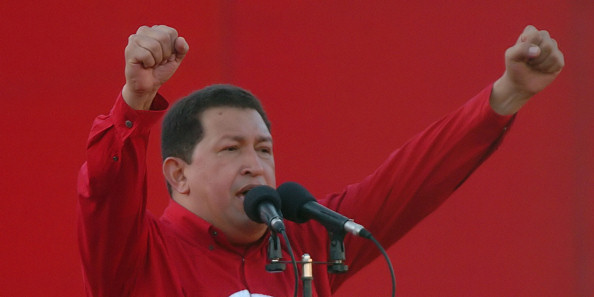
Unforgettable
Hugo Chávez Frías passed away from the pain and struggle of this world on March 5, only to become a permanent part of a constellation of revolutionary heroes. This morning, on March 8, Chávez will be laid to rest in a manner that will leave him on permanent display for millions of his adoring followers in Venezuela, the oppressed and marginalized majority whose cause he so valiantly championed through 14 years of government and at least 17 elections and referenda. He will be preserved physically, and politically, having emerged not just as Venezuela’s most significant leader since Simón Bolívar, but as the recognizable face of a global anti-imperialist movement. Chávez has now become a firm part of the Latin American political canon. In death, he is being literally monumentalized, an institution in his own right.
While many of us do feel his passing as an immense and deep loss, and 14 years was simply not enough, there is much to celebrate, and much to build on and continue. Apart from the seemingly infinite video and film recordings, we will never again hear his booming voice or his laughter, hear him sing, see him pound his fists into the air, watch that mischievous look in his eye that accompanied his smile–those closest to him, and those who followed him closely, will feel this sort of absence especially and little can make up for it. On the other hand, one should not descend into tragedy and remain stuck in mourning. Hugo Chávez is now more than just a man, or a memory of a man, he is a movement. Without a doubt, Hugo Chávez has become the new Ché Guevara–expect to see him everywhere, for the rest of your own days.
Over the past few days, and relying primarily and purposely on Venezuelan media and secondly on non-mainstream media from elsewhere,* I have been tracing (here mostly, here too) the outpouring of international support that has accompanied the millions coming out yet in the Venezuelan streets yet again for Chávez. The latest news is that 53 international delegations will be participating in the funeral for Chávez, 32 of which are led by heads of government or state. Leaders and representatives of Bolivia, Brazil, Cuba, Colombia, Ecuador, Guyana, Uruguay, Equatorial Guinea, Argentina, Honduras, and Peru, have visited the Military Academy where Chávez has been temporarily placed. Also visiting Chávez’s casket in the chapel have been the Prime Ministers of Antigua and Barbuda, Belize, Dominica, Saint Lucia, St. Vincent and the Grenadines, St. Kitts, Trinidad and Tobago, and Curaçao. Due to arrive this morning for the funeral will be the following presidents: Chile, Sebastián Piñera; Costa Rica, Laura Chinchilla; Dominican Republic, Danilo Medina; El Salvador, Mauricio Funes; Guatemala, Otto Pérez Molina; Mexico, Enrique Peña Nieto; Panama, Ricardo Martinelli; Suriname, Desiré Delano; Belarus, Aleksandr Lukashenko; Islamic Republic of Iran, Mahmoud Ahmadinejad, and the Prince of Asturias on behalf of the King of Spain. Chinese media reported somewhat different numbers: “A total of 33 heads of state and 55 high-level international delegations from 54 countries and regions“–a figure that seems to grow by the minute, and which has been confirmed by Venezuelan media. A total of at least 15 governments around the world have declared official days of mourning in honour of Chávez, most declaring at least three days of mourning, among them: Argentina, Bolivia, Brazil, Chile, Cuba, Ecuador, Haiti, Iran, Nicaragua, the Dominican Republic, Uruguay, and as far away as Belarus, Nigeria (with seven days of official mourning), and the Sahrawi Arab Democratic Republic (see more here).
Those interested in following the funeral, can do so starting from 11:30 am (EST), by seeing the live stream here. Otherwise, there is a thorough and comprehensive collection of videos on this YouTube channel.
North American and western European mainstream media are worth ignoring almost entirely, unless one’s purpose is to do yet another catalogue of the abrasive and abusive brainwashing by amateur propagandists, something that passes itself off as “journalism” and which holds media consumers in utter contempt. Our media are no longer produced by adults, nor are their products intended for adults. The predictable narrative is that of the megalomaniac corporate media serving the 1% which has great reason to fear that the real message of Chávez’s life and accomplishments might escape their control. And it has escaped their control. Western media are not just quite dispensable, they invite dismissal altogether. Those who spend their time with such media will encounter the usual clumsy and irresponsible characterizations of Chávez as a “dictator” and “demagogue” or that Venezuelan society is “divided” (which society isn’t?), as if it were somehow divided into two equal parts. When what we have leading us are bland cardboard cutouts who play powerlessness (when it comes to spending on education, healthcare, social security, and employment creation), because they are mere stand-ins for the powerful corporate elites, surely someone with character, personality, passion and purpose must be a demagogue.
Fortunately, less reactionary opinions have been flowing in, presented below in no particular order, and with only a few selected.
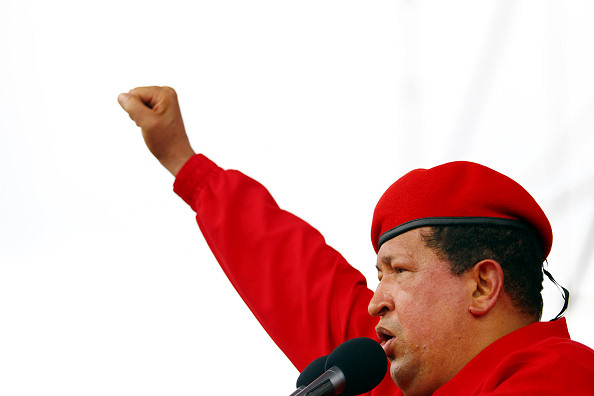
Permanence
Cristina Fernández: “I only want to remember him as he was alive. Because he is alive.
Raul Castro: “Hugo Chávez died unbeaten, invincible and victorious.”
ALBA (Bolivarian Alliance for the Peoples of Our America): “President Hugo Chávez was in life the beacon of light that inspired the emergence of ALBA-TCP, as an emancipatory project of the Latin American and Caribbean countries…[in the history of the Americas] no president had done so much in such a short time for the integration and unity of the peoples of our continent….UNASUR, CELAC, Petrocaribe and ALBA are the practical expressions of the integrationist fervor of Commander Hugo Chávez …who brought fervor and passion to the causes of integration and anti-imperialism, for the redemption of the poor and marginalized of the whole world. Today the world’s poor feel deeply for the physical passing of the leader who represented their voice and who will remain forever in their hearts, our dear Commander Hugo Chávez.”
UNASUR (Union of South American Nations): “The lasting mark made by President Chávez , head of the Bolivarian Revolution and key leader of the South American union, leaves a legacy and historical example of solidarity with fraternal peoples, that will last in the memory and hearts of Latin Americans, as a contribution to the path of our regional integration.”
Statements from across the government of Belize, including the opposition: “President Chávez was a true friend of Belize and over many years, the Belizean people enjoyed the fruits of friendship and cooperation that the Government and people of the Bolivarian Republic offered Belize under the leadership of President Chávez. His public life was one of leadership and struggle for high ideals and principles, with the purpose of improving the lives of individual citizens and promoting a spirit of community among peoples and among nations. It is under his leadership that the Community of Latin American and Caribbean States was established in Caracas, Venezuela, in December of 2011.”
Alicia Bárcena, Executive Secretary for ECLAC/CEPAL (Economic Commission of Latin America and the Caribbean): “Mr. Chávez will take his rightful place in our hearts and minds among the great men and women who have left their mark on the history of our continent. I had the opportunity to witness his unfailing commitment to the dispossessed, the poorest and the most humble, which defined his political and private persona. He made equality his compass, and the proud sovereignty of his homeland was his constant guide. His emergence changed the face of the Americas for the better, because Mr. Chávez proved that when the will for constructive change is the expression of majority aspiration rather than just a personal enlightenment, it becomes an unstoppable force. He was a determined campaigner for Latin American brotherhood, and his vision and tenacity are at the root of the new road map for integration, as UNASUR to CELAC, and ALBA to PETROCARIBE owe their origins to Mr. Chávez.”
Hebe de Bonafini, president of the association of the Mothers of the Plaza de Mayo (Argentina): “Not only has a comrade departed, but one who is irreplaceable. He was one of these men who is rarely born, who is not repeated.”
General Workers’ Confederation of Argentina: “To the brave people of Venezuela, there is no obstacle that can divert the road. During these years of hard work building the Bolivarian revolution, under the key leadership of Commander Hugo Chávez Frías, popular consciousness and popular will have become consolidated offering an example and guide for all of our America….the workers of Argentina will not forget the beloved Commander, who will live forever in the hearts and struggles of dignified peoples.”
National Indigenous Peasant Movement of Argentina (MNCI): “Commander Hugo Chávez devoted his life, energy, love and passion to Latin American unity and integration, to win liberty and equality for our peoples, for bringing the dawn (ALBA) of socialism.”
Evo Morales: “a caring brother, a fellow revolutionary, a Latin American who fought for his country, for the great homeland, as Simon Bolivar did. He gave his whole life for the liberation of the Venezuelan people, the people of Latin America and all anti-imperialist fighters in the world.”
“Chávez died, but he will return in the millions, in the thousands of millions of Chavistas, not just in Venezuela, Bolivia, etc., but across the planet.”
Rigoberta Menchú (Nobel Peace Prize laureate): “He has not died. He has made a transcendental passage in the evolution of life….We have lost a great president, a great friend, and a great comrade of the most oppressed peoples of the continent.”
Prime Minister of Haiti, Laurent Lamothe: “They helped us after the (2012) floods. They sent over 600 tons of food just recently. They are helping us every day with Petrocaribe. We’re going there to pay tribute to their people and of course show solidarity with the Venezuelan people.”
Mahmoud Abbas: “This is a great loss for us. The Palestinian people will remain faithful to Chávez whose memory will remain engraved in our consciousness in recognition of his courageous support for our right to an independent Palestinian state with Jerusalem as its capital.
Vladimir Putin: “President Hugo Chávez lifted hundreds of thousands, millions, of people out of poverty. He was talented and courageous. He is added to the list of sons of Latin America as Simon Bolivar, Ernesto ‘Che’ Guevara and, among the living, Fidel Castro. He became a symbol of the Latin American struggle for independence and freedom. The ideals were internationalist, but he was also proud of his indigenous origins. Speaking of international affairs, I can safely say that Chávez always tried to ensure the establishment of friendly relations with all countries of the world without exception. But he never did that at the cost of suppressing the interests of his beloved Venezuela, never did he try to be nice to all at the expense of his own people.”
Jimmy Carter: “President Hugo Chávez will be remembered for his bold defense of the autonomy and independence of Latin American governments, and for his formidable communication skills in making a personal connection with his supporters, both at home and in the abroad.”
Imran Khan: "Sad 2 hear of bold Venezuelan Pres Hugo Chavez's death.He stood firm against forces of imperialism in trad of great Latin American ldrs.RIP" [Twitter]
Sean Penn: “Today the people of the United States lost a friend it never knew it had. And poor people around the world lost a champion. I lost a friend I was blessed to have. My thoughts are with the family of President Chavez and the people of Venezuela.”
Oliver Stone: “I mourn a great hero to the majority of his people and those who struggle throughout the world for a place. Hated by the entrenched classes, Hugo Chávez will live forever in history. My friend, rest finally in a peace long earned.”
Undefeated
Hugo Chávez remains undefeated, as expressed by Derrick O’Keefe, the president of the Canadian Peace Alliance. Imperialism could not defeat him. The U.S. failed in its efforts to overthrow him by way of its proxies. Chávez won election after election after referendum. Venezuela became the most democratic state in the modern history of the Americas. Unlike any of us in the North, Venezuelans were given the opportunity to participate in rewriting their own Constitution. Chávez could draw crowds that, in both absolute numbers, and especially in proportional terms, Obama could only dream of ever attracting. Chávez drew such crowds regularly at home, and often abroad too.
Among the numerous impressive social and economic achievements under Chávez and the Bolivarian Revolution, scholars have gathered the following details:
To make a more objective assessment of the real progress achieved by the Bolivarian Revolution in Venezuela during the last 13 years it is essential to review some of the key available data on the social determinants of health and poverty: education, inequality, jobs and income, health care, food security and social support and services.
With regard to these social determinants of health indicators, Venezuela is now the country in the region with the lowest inequality level (measured by the Gini Coefficient) having reduced inequality by 54%, poverty by 44%. Poverty has been reduced from 70.8% (1996) to 21% (2010). And extreme poverty reduced from 40% (1996) to a very low level of 7.3% (2010). About 20 million people have benefited from anti-poverty programs, called “Misiones” (Up to now, 2.1 million elderly people have received old-age pensions – that is 66% of the population while only 387,000 received pensions before the current government).
Education is a key determinant of both health and poverty and the Bolivarian government has placed a particular emphasis on education allotting it more than 6% of GDP. UNESCO has recognized that illiteracy [has] been eliminated furthermore, Venezuela is the 3rd county in the region whose population reads the most. There is tuition free education from daycare to university; 72% of children attend public daycares and 85% of school age children attend school. There are thousands of new or refurbished schools, including 10 new universities. The country places 2nd in Latin America and 5th in the world with the greatest proportions of university students. In fact, 1 out of every 3 Venezuelans are enrolled in some educational program. It is also a great achievement that Venezuela is now tied with Finland as the 5th country with the happiest population in the world.
Before the Chavez government in 1998, 21% of the population was malnourished. Venezuela now has established a network of subsidized food distribution including grocery stores and supermarkets. While 90% of the food was imported in 1980, today this is less than 30%. Misión Agro-Venezuela has given out 454,238 credits to rural producers and 39,000 rural producers have received credit in 2012 alone. Five million Venezuelan receive free food, four million of them are children in schools and 6,000 food kitchens feed 900,000 people. The agrarian reform and policies to help agricultural producers have increased domestic food supply. The results of all these food security measures is that today malnourishment is only 5%, and child malnutrition which was 7.7% in 1990 today is at 2.9%. This is an impressive health achievement by any standards.
Some of the most important available data on health care and public health are as following:
*infant mortality dropped from 25 per 1000 (1990) to only 13/1000 (2010);
*An outstanding 96% of the population has now access to clean water (one of the goals of the revolution);
*In 1998, there were 18 doctors per 10,000 inhabitants, currently there are 58, and the public health system has about 95,000 physicians;
*It took four decades for previous governments to build 5,081 clinics, but in just 13 years the Bolivarian government built 13,721 (a 169.6% increase);
*Barrio Adentro (i.e., primary care program with the help of more than 8,300 Cuban doctors) has approximately saved 1,4 million lives in 7,000 clinics and has given 500 million consultations;
*In 2011 alone, 67,000 Venezuelans received free high cost medicines for 139 pathologies conditions including cancer, hepatitis, osteoporosis, schizophrenia, and others; there are now 34 centres for addictions,
*In 6 years 19,840 homeless have been attended through a special program; and there are practically no children living on the streets.
*Venezuela now has the largest intensive care unit in the region.
*A network of public drugstores sell subsidized medicines in 127 stores with savings of 34-40%.
*51,000 people have been treated in Cuba for specialized eye treatment and the eye care program “Mision Milagro”; has restored sight to 1.5 million Venezuelans.
An example that clearly has earned the right to be hated by our ruling right wing parties (in Canada, the U.S., Europe), and which has earned the contempt of the children of Venezuelan oligarchs who call all of this “misery,” who call Chávez “the worst president ever” (even when compared to those that massacred thousands in the streets). This is the madness of the oppressors, that they can turn the world upside down, call thin fat, short tall, war peace, and actually demand that we believe them. They are finished. The anti-Bolivarian opposition in Venezuela can look forward to being buried and soundly defeated like never before in the elections that will be scheduled to take place in the next 30 days. Advance congratulations to President Nicolás Maduro. Long Live Hugo Chávez, Chávez Lives Forever.
* Sites I recommend are:
- TELESUR
- CORREO DEL ORINOCO
- PARTIDO SOCIALISTA UNIDO DE VENEZUELA (PSUV)
- Venezuela Analysis
- Union of South American Nations
- Bolivarian Alliance for the Peoples of Our America
- PetroCaribe
Uploaded by teleSUR tv


Hugo Chávez Frías: An Unforgettable and Victorious Permanence